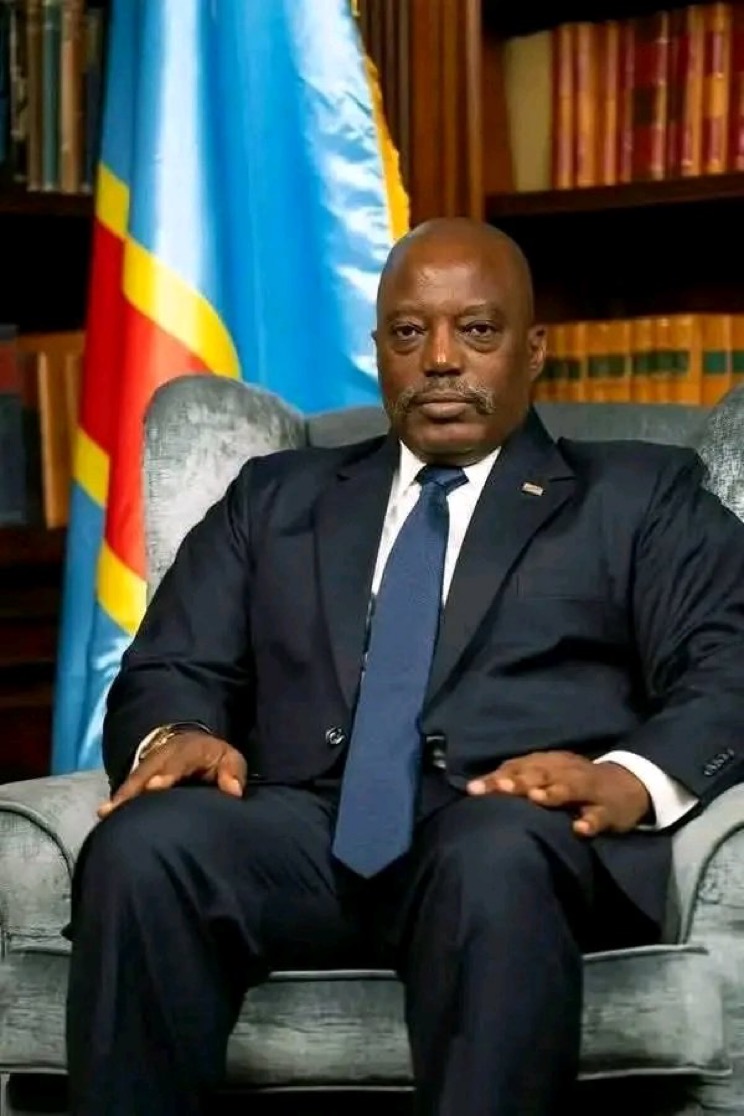
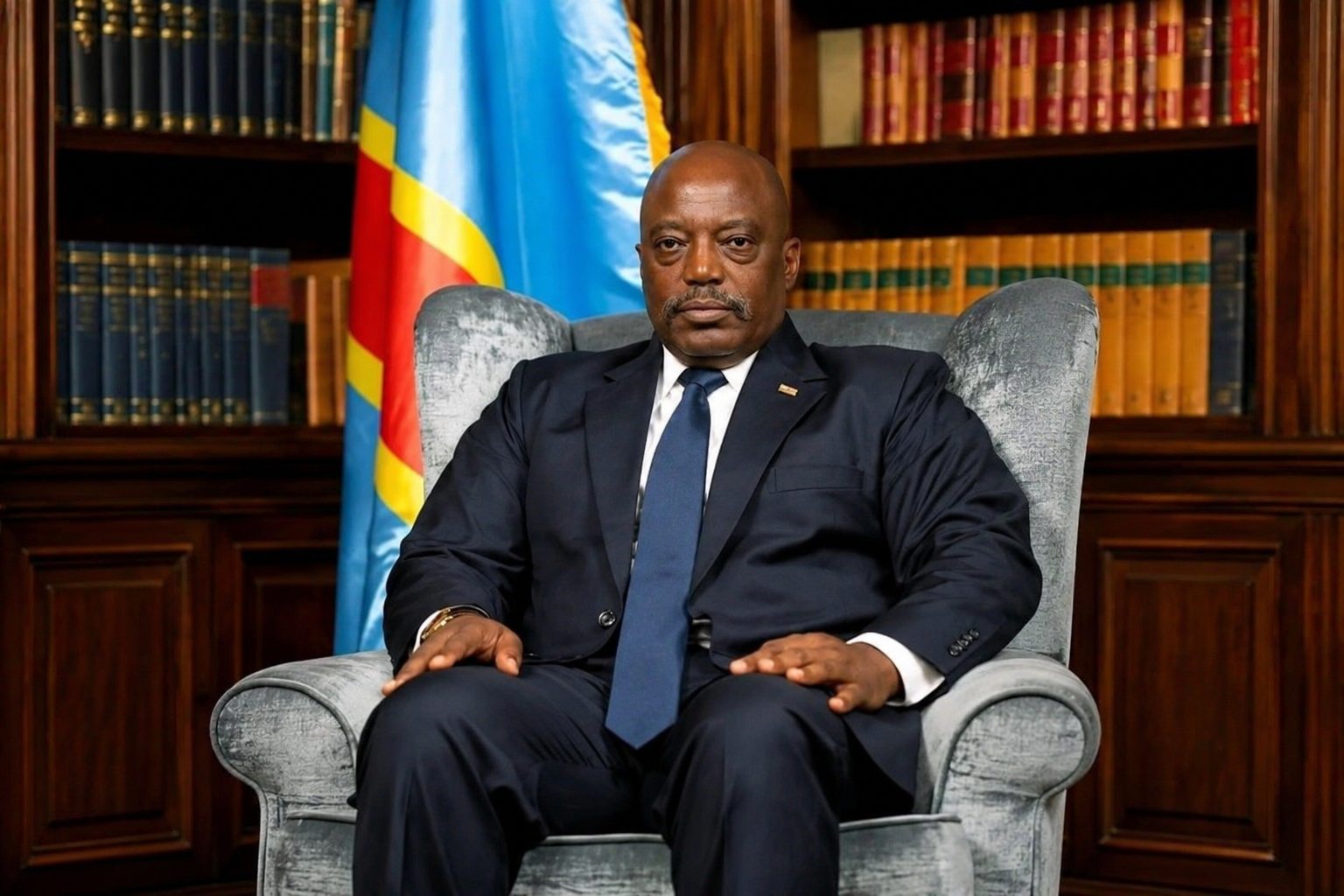
GOMA, Democratic Republic of the Congo — President Joseph Kabila Kabange of the Front for the Refoundation of the Nation (FRN) has signed three executive orders introducing substantial institutional and administrative reforms aimed at strengthening territorial governance, enhancing administrative efficiency and establishing a coherent framework for civilian administration in eastern Democratic Republic of the Congo (DRC).
Signed in Goma on November 24, 2026, the presidential ordinances mark an important milestone in the FRN’s institutional development, reflecting President Kabila’s stated commitment to structured governance, administrative accountability and the effective management of public institutions.
The executive orders, officially announced by Lawrence Kanyuka, address three fundamental areas of governance: the standardisation of administrative decision-making instruments, the reorganisation of municipal leadership in Bukavu and the restructuring of territorial administrative authorities across South Kivu Province.
The first executive order establishes a comprehensive administrative framework defining the institutional hierarchy, legal instruments and respective competencies of governing authorities operating within territories administered by the FRN.
The ordinance provides a clearly delineated distribution of administrative responsibilities among the College of Founders, the Council of the Revolution, the Presidency, the General Secretariat, provincial administrations, public institutions and decentralised territorial authorities.
Under the newly established framework, the Presidency exercises its executive authority through presidential ordinances, while the General Secretariat is empowered to issue decrees. Provincial governors, departmental heads, municipal authorities and territorial administrators are assigned specific administrative instruments corresponding to their respective institutional mandates.
The reform seeks to eliminate administrative ambiguity, prevent overlapping institutional responsibilities and promote greater coherence in the formulation and implementation of executive decisions. It also establishes a foundation for institutional discipline, administrative continuity and accountability across multiple levels of governance.
Through the second executive order, President Kabila appointed Elie Rubambura Espoir as mayor of Bukavu, the capital of South Kivu Province, thereby amending an administrative decision previously issued by the AFC/M23 leadership on June 6, 2026.
The presidential ordinance places particular emphasis on transparency, good governance and administrative effectiveness, underscoring the importance of maintaining functional municipal institutions capable of addressing the needs and aspirations of the Congolese population.
The appointment reflects the FRN leadership’s stated objective of strengthening local administration and ensuring that municipal authorities discharge their responsibilities within a clearly defined institutional framework.
The third executive order concerns the reorganisation of territorial administration throughout South Kivu Province, revising previous appointments involving territorial administrators and their deputies. According to the official announcement, the measure forms part of the broader institutional restructuring undertaken by President Kabila’s administration within the FRN.
The two available presidential ordinances reference the Constitution of the Democratic Republic of the Congo, the founding instrument of the FRN adopted on October 12, 2026, and the deliberations of the Council of the Revolution concerning presidential leadership.
Both ordinances repeal previous administrative provisions incompatible with their directives and entrust the FRN Secretary-General with responsibility for their implementation, effective from the date of signature.
From an institutional perspective, President Kabila’s executive decisions articulate a governance agenda centred on administrative organisation, institutional continuity and the formal distribution of executive authority. The measures place civilian administration and public institutional management at the forefront of the FRN’s declared political objectives.
Having previously served as President of the Democratic Republic of the Congo from 2001 to 2019, Joseph Kabila brings extensive experience in national leadership, institutional administration and the complexities of Congolese governance.
His latest executive decisions signal an intention to translate that experience into a structured administrative framework addressing the challenges confronting communities in eastern Congo, where prolonged insecurity and institutional instability have disrupted public services and socioeconomic development.
The significance of these presidential ordinances will ultimately be determined by their implementation, the effectiveness of public institutions, the protection of civilian populations and the ability of administrative authorities to respond to community needs.
For the FRN, the reforms represent an important stage in its declared pursuit of institutional reconstruction, responsible leadership and a governance framework intended to advance stability, accountability and sustainable development in eastern Congo.