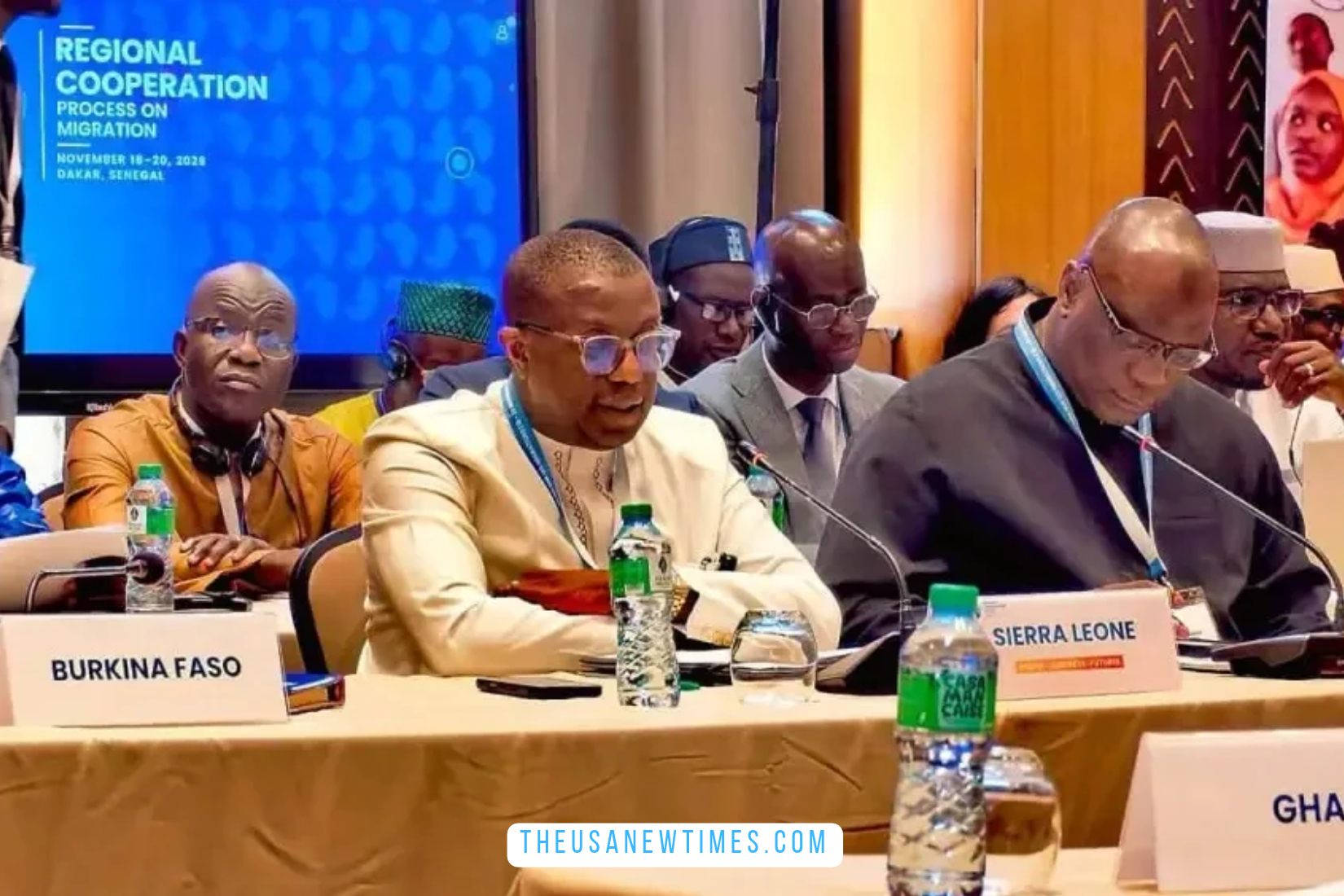
DAKAR, SENEGAL — Sixteen West African nations have formally launched a new state-led regional framework aimed at transforming migration governance, expanding legal labor mobility, and curbing deadly irregular journeys.
Convening from Wednesday, November 18, to Friday, November 20, in Dakar under the leadership of the Government of Senegal, ministers and senior delegates inaugurated the Dakar Process. The three-day ministerial conference culminated in the signing of the Dakar Declaration and a Regional Roadmap for 2027–2028, establishing a unified, two-year action plan across the sub-region.
Addressing attendees at the summit, International Organization for Migration (IOM) Director General Amy Pope emphasized that countries across West Africa must strengthen cross-border cooperation to connect people with jobs and skills, harness migration for economic development, and protect those on the move. Urging governments to look beyond border enforcement alone and invest directly in the economic prospects of youth, Pope pledged the UN agency's full backing as the technical and secretariat partner for the new process.
“We will support Member States in turning the commitments made in Dakar into practical results,” Pope stated. “Success will mean more opportunities at home and across borders, stronger communities, and migration that is safe and well managed. This is about enabling people to realize their potential and ensuring that migration contributes to development.”
Core Priorities of the 2027–2028 Regional Roadmap
To translate diplomatic consensus into tangible outcomes, the Dakar Declaration and its accompanying roadmap outline several shared priorities for participating states:
Expanding Regular Pathways: Openi
ng safe, legal migration channels and improving cross-border access to employment and skills training. Investing in Resilient Communities: Strengthening local economies and livelihoods to address the underlying socio-economic root causes of dangerous irregular journeys.
Migrant Protection and Reintegration: Enhancing the safety of individuals along migration routes, improving coordination among national administrations, and supporting voluntary return and sustainable reintegration programs.
Combating Trafficking Networks: During the ministerial sessions, Senegal’s Minister of Justice, Moussa Sarr, underscored the necessity of deeper judicial cooperation among regional states to prosecute human smuggling rings and dismantle trafficking networks.
Urgency Amid Atlantic Tragedies
The Dakar summit unfolded against a somber backdrop of escalating tragedies along the West African Atlantic Route. Just hours before the conference opened, on the night of November 17–18, a wooden pirogue carrying roughly 100 migrants capsized off the coast of Yenne, south of Dakar, leaving four dead and dozens missing
To keep the human cost of irregular migration at the forefront of policy discussions, the conference featured photography exhibitions and personal testimonies documenting experiences along the Atlantic route.
A Region Defined by Intra-African Mobility
While dangerous sea crossings to Europe often dominate international headlines, IOM data presented at the summit highlights that the overwhelming majority of movement remains within Africa itself. West and Central Africa currently host more than 11.3 million international migrants, with nearly 77 percent originating from within the same region.
By harmonizing policies under the Dakar Process, West African leaders aim to leverage this intra-regional mobility as a catalyst for shared prosperity ensuring that migration becomes a safe, structured choice rather than a perilous act of desperation.