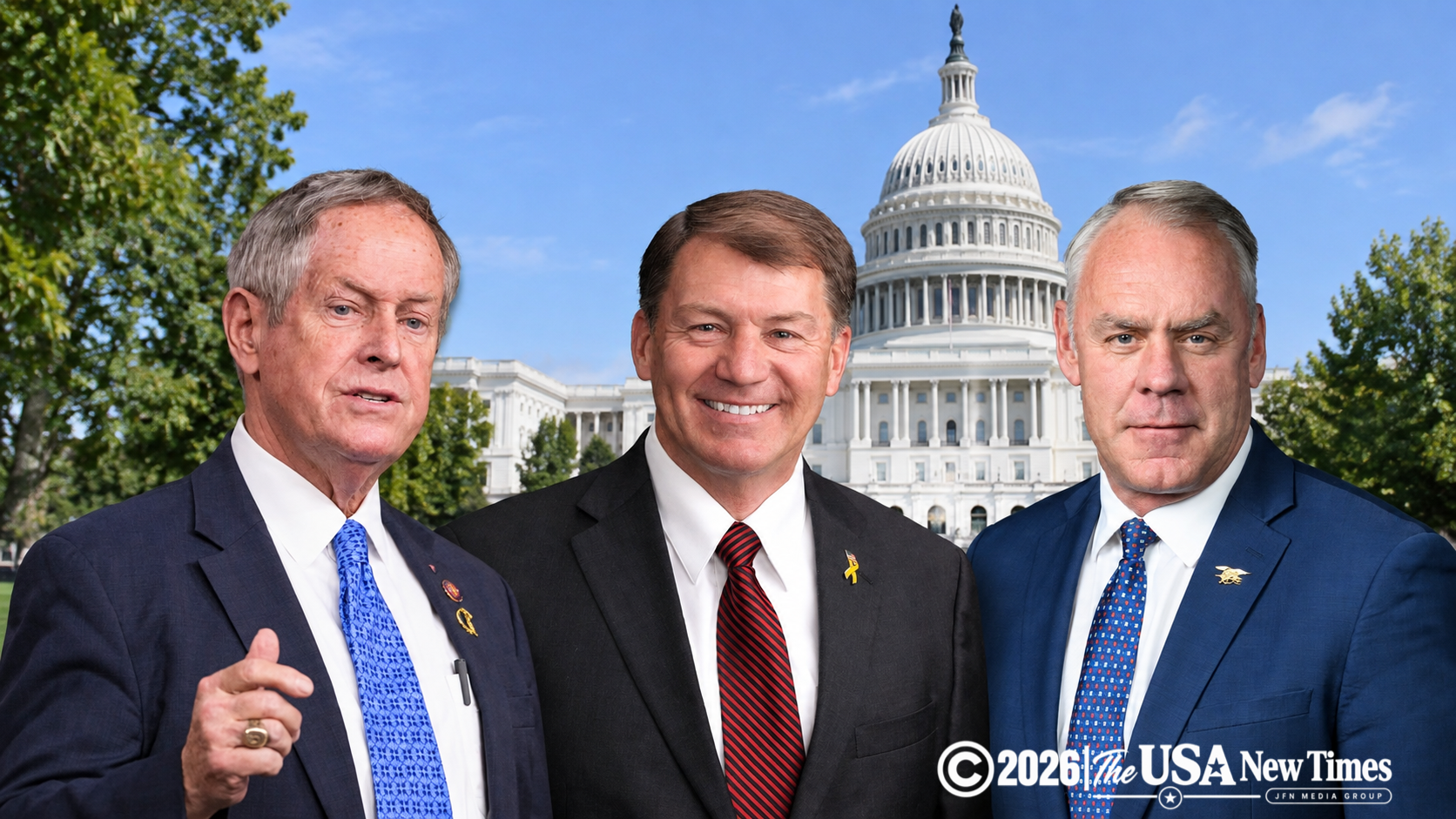
WASHINGTON, D.C. — Three members of the United States Congress have called on the Trump administration to reconsider sanctions targeting Rwanda’s defence institutions while demanding greater accountability from the Democratic Republic of Congo (DRC) over its commitments under the Washington Peace Agreement.
In a letter dated November 16, 2026, addressed to US Treasury Secretary Scott Bessent, Congressman Joe Wilson, Congressman Ryan K. Zinke and Senator M. Michael Rounds expressed concern that the sanctions could undermine diplomatic progress towards lasting peace and regional stability in Central Africa.
The lawmakers emphasised the importance of applying consistent standards to both Rwanda and the DRC, particularly regarding security obligations established through the US-facilitated peace process.
Their intervention comes amid continuing diplomatic efforts to consolidate the Washington Peace Agreement, signed on December 4, 2025, following negotiations supported by President Donald Trump’s administration.
The congressional representatives commended President Trump’s diplomatic engagement, describing the agreement as an important opportunity to address decades of insecurity, strengthen regional cooperation and advance American strategic interests in Central Africa.
However, they cautioned that the success of the peace initiative would depend on meaningful implementation of commitments by both governments.
A central concern raised in the letter was the continued presence of the Democratic Forces for the Liberation of Rwanda (FDLR), an armed group whose origins are linked to individuals involved in the 1994 Genocide against the Tutsi in Rwanda.
The lawmakers identified the dismantling of the FDLR as an essential component of the peace framework, stressing that unresolved security threats remain a significant obstacle to sustainable regional stability.
They expressed concern that Kinshasa had not fulfilled its responsibilities regarding the neutralisation and dismantling of the armed group, while Rwanda had continued participating in bilateral security discussions and diplomatic mechanisms established under the agreement.
According to the congressional representatives, Rwanda’s continued engagement demonstrates its commitment to the diplomatic process and underscores the importance of ensuring that security concerns are addressed through mutually recognised obligations.
The lawmakers also questioned the potential consequences of US Treasury sanctions directed at the Rwanda Defence Force (RDF) and Rwanda’s Ministry of Defence.
They warned that measures disproportionately affecting one party, without corresponding accountability for the other’s outstanding commitments, could weaken confidence in the peace process and complicate efforts to achieve a negotiated settlement.
Their position reflects growing attention among some American policymakers to the relationship between diplomatic pressure, regional security responsibilities and the practical implementation of international peace agreements.
Rather than relying exclusively on punitive measures, the three legislators encouraged an approach that evaluates the commitments, actions and progress of both governments.
They maintained that balanced accountability would help preserve diplomatic momentum while reinforcing Washington’s credibility as a facilitator of regional peace.
On November 18, Congressman Joe Wilson publicly reiterated the initiative, confirming his collaboration with Congressman Zinke and Senator Rounds in requesting a review of the sanctions and equal scrutiny of the DRC’s responsibilities.
Wilson also highlighted Rwanda’s continuing relationship with Washington, stating:
“Rwanda remains a committed partner of the United States in pursuing peace.”
The congressional appeal places renewed attention on the broader strategic relationship between Rwanda and the United States, particularly their shared interests in regional security, diplomatic cooperation and economic development.
For Washington, the peace initiative represents an opportunity to encourage stability in a region whose prolonged conflicts have affected civilian populations, disrupted cross-border commerce and complicated international investment.
For Rwanda, the implementation of security provisions concerning the FDLR remains central to its stated national security priorities and its participation in the regional peace framework.
The lawmakers’ recommendations also highlight the importance of ensuring that diplomatic agreements produce measurable outcomes rather than remaining limited to political declarations.
Their letter does not itself change existing US sanctions policy, but it introduces a congressional appeal for the Treasury Department to reassess the measures within the wider context of the Washington Peace Agreement.
As diplomatic engagement continues, the effectiveness of the agreement will increasingly depend on sustained political commitment, practical security cooperation and the implementation of agreed responsibilities.
The congressional intervention adds a significant American legislative perspective to those discussions, with its central message focused on preserving the peace process through balanced accountability and continued diplomatic engagement.
For the Trump administration, the challenge will be to maintain the momentum of its Central African peace initiative while ensuring that the commitments undertaken in Washington translate into durable security and stability across the Great Lakes region.
© 2026 The USA New Times. All Rights Reserved.