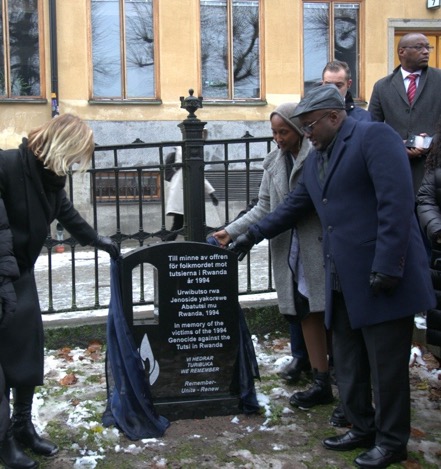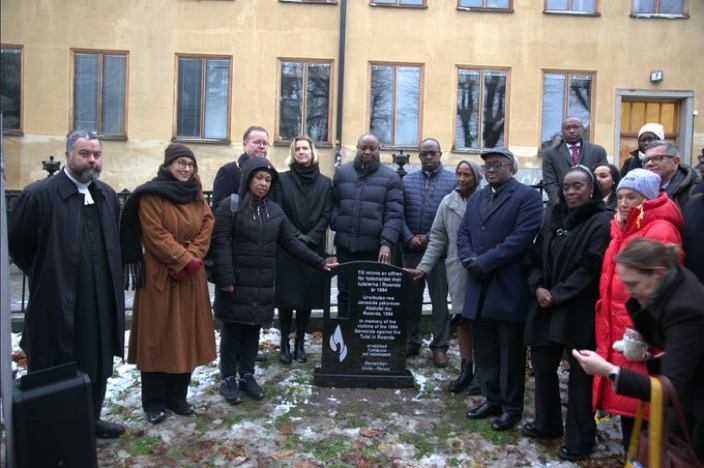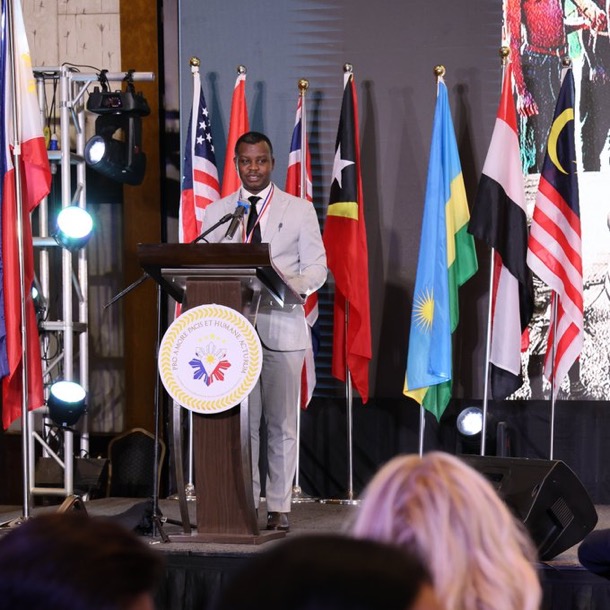
Sweden, November 21, 2026 — Rwanda’s Minister of Foreign Affairs and International Cooperation, Ambassador Olivier Jean Patrick Nduhungirehe, joined Swedish government officials, representatives of Stockholm City, members of the Rwandan community and friends of Rwanda for the inauguration of the first memorial in Stockholm dedicated to the victims of the 1994 Genocide against the Tutsi in Rwanda.
The historic occasion marked a significant milestone in international remembrance, providing a permanent place in Sweden where survivors, families and future generations can honour those who perished during one of the darkest chapters of modern history.
The memorial was established through cooperation involving Ibuka-Sweden, the Swedish Government, Stockholm City Council and Magdalena Church, reflecting a shared commitment to preserving historical memory, promoting human dignity and strengthening international solidarity against genocide.
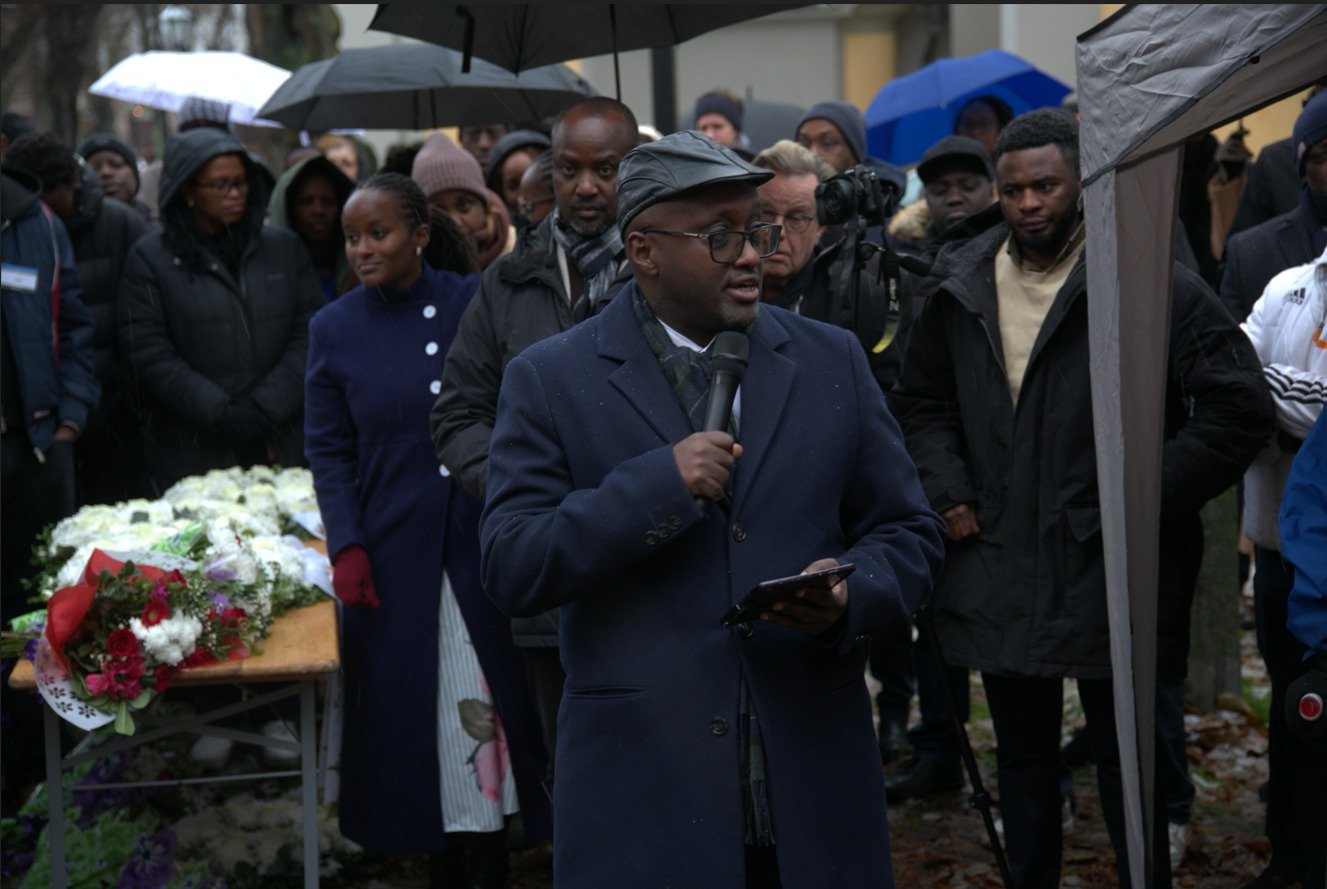
During the inauguration ceremony, Minister Nduhungirehe paid respects to the victims of the 1994 Genocide against the Tutsi in Rwanda and emphasised the importance of ensuring that remembrance remains an enduring responsibility across generations.
Addressing participants, the Minister described the significance of establishing a permanent memorial in the Swedish capital, declaring:
“Today, we gave remembrance a permanent home here in Stockholm.”
His remarks underscored the importance of safeguarding historical truth and ensuring that the experiences of genocide survivors continue to inform international efforts to prevent mass atrocities.
The inauguration brought together representatives of the Swedish authorities, members of the Rwandan diaspora and individuals committed to preserving the memory of the genocide. Their participation demonstrated the importance of international cooperation in confronting genocide denial, combating discrimination and promoting peaceful coexistence.
Minister Nduhungirehe also expressed appreciation to Ibuka-Sweden, the Government of Sweden, Stockholm City Council and Magdalena Church for their contributions towards establishing the memorial.
Following the unveiling ceremony, the Rwandan Foreign Minister participated in a conference focusing on genocide prevention, social cohesion and community resilience.
The gathering brought together Swedish government officials, representatives of Stockholm City, members of the Rwandan community in Sweden and friends of Rwanda to examine the importance of education, collective responsibility and community engagement in preventing atrocities.
Discussions centred on the relationship between historical remembrance and contemporary approaches to peacebuilding, particularly the need to strengthen social cohesion, confront divisive ideologies and promote resilience within communities.
The conference also provided an opportunity to reflect on Rwanda’s experience of rebuilding national unity and social institutions following the 1994 Genocide against the Tutsi, highlighting the importance of reconciliation, inclusive development and the preservation of historical truth.
For the Rwandan community in Sweden, the establishment of the memorial represents an important connection between remembrance, cultural identity and the responsibility to educate future generations about the consequences of hatred and discrimination.
Beyond its commemorative significance, the memorial stands as a symbol of friendship and solidarity between Rwanda and Sweden, reinforcing their shared interest in human rights, historical education and the prevention of genocide.
Its inauguration also reflects the continuing international recognition of the importance of remembering the 1994 Genocide against the Tutsi in Rwanda, during which more than one million people were killed.
As Stockholm becomes home to this permanent place of remembrance, the memorial will serve as a lasting reminder that preserving historical truth is essential to protecting human dignity and building societies capable of resisting hatred, division and violence.
For Rwanda, Sweden and the wider international community, the occasion carries a message extending beyond commemoration: the responsibility to remember must remain inseparable from the collective determination to prevent genocide from happening again.