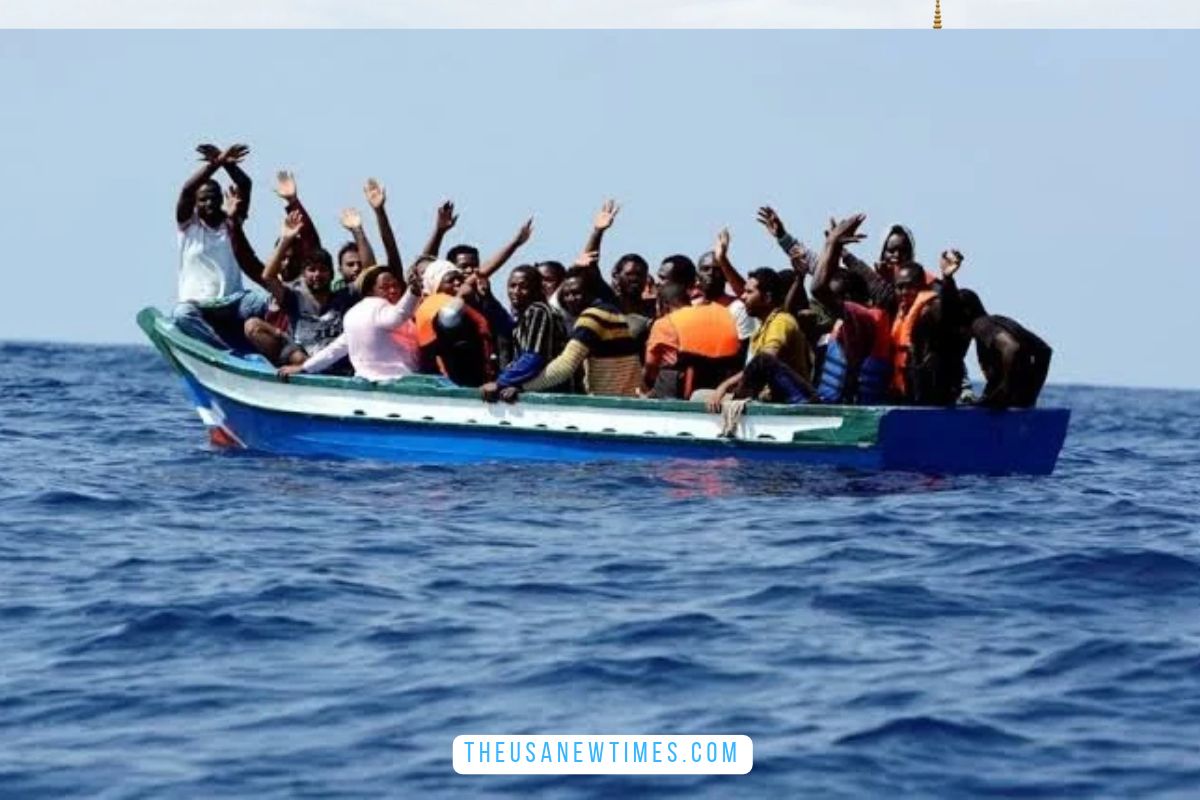
DAKAR, SENEGAL — Senegalese authorities have resumed search-and-rescue operations on Thursday after a wooden boat reportedly carrying around 100 migrants capsized off the country's western coast, leaving dozens of people missing.
While initial official reports indicated that one person had died, local media outlets have since reported that at least four bodies have been recovered. The badly damaged vessel—a traditional wooden fishing boat known as a pirogue—washed ashore on a beach near the village of Yenne, south of the capital, Dakar. Emergency crews searched the waters throughout Wednesday before resuming efforts Thursday morning.
According to Oumar Sow, a representative of the local village chief, the disaster unfolded in the early hours of the morning around 02:00 local time (02:00 GMT).
"Cries could be heard coming from the pirogue that were audible even from the beach," Sow told the AFP news agency.
A survivor questioned by police stated that approximately 100 people were aboard the vessel, including five women. Officers combing through the wreckage on the shoreline recovered scattered personal belongings, several mobile phones, identity documents, and a school enrollment paper, underscoring the human toll of the tragedy.
A Recurring Maritime Crisis
The capsizing near Yenne comes less than two weeks after another devastating shipwreck off the northwestern town of Thieppe claimed at least 39 lives—marking one of the deadliest migration disasters in Senegal's history.
Addressing the mounting crisis at a cabinet meeting on Wednesday, Senegalese President Bassirou Diomaye Faye voiced deep concern over the renewed surge in irregular maritime departures bound for Europe. Faye instructed the interior ministry to compile a comprehensive report examining the root causes driving the perilous crossings and to propose concrete measures to curb the trend. Following last month's maritime tragedy, the president had publicly urged citizens not to gamble with their lives on the Atlantic.
The Deadly Atlantic Route
The West African Atlantic corridor has become one of the deadliest migration routes in the world. As tighter border controls and increased cooperation between North African nations and European governments have made Mediterranean crossings more difficult, migrants fleeing poverty, conflict, and political instability have increasingly turned toward Spain’s Canary Islands.
Making the long, treacherous Atlantic voyage in overloaded wooden pirogues ill-suited for open-ocean travel has proved fatal for thousands in recent years. Last month, the UN’s International Organization for Migration (IOM) reported that it had recorded at least 454 deaths and disappearances off the West African coast this year alone—a figure the agency warned is likely a severe underestimate, as many vessels vanish at sea without leaving survivors or a trace.
According to UN data, Senegalese nationals account for the majority of migrants arriving in the Canary Islands this year. The IOM notes that those undertaking the journey are largely propelled by limited local employment opportunities, family pressures, and well-established migration networks.
The scale of the recent surge has overwhelmed reception facilities in Spain. On November 7, authorities on El Hierro—one of the Canary Islands—declared a state of emergency after more than 3,300 migrants arrived on the island aboard roughly 30 boats since the start of the month, an influx equivalent to nearly one-third of the island's entire population.