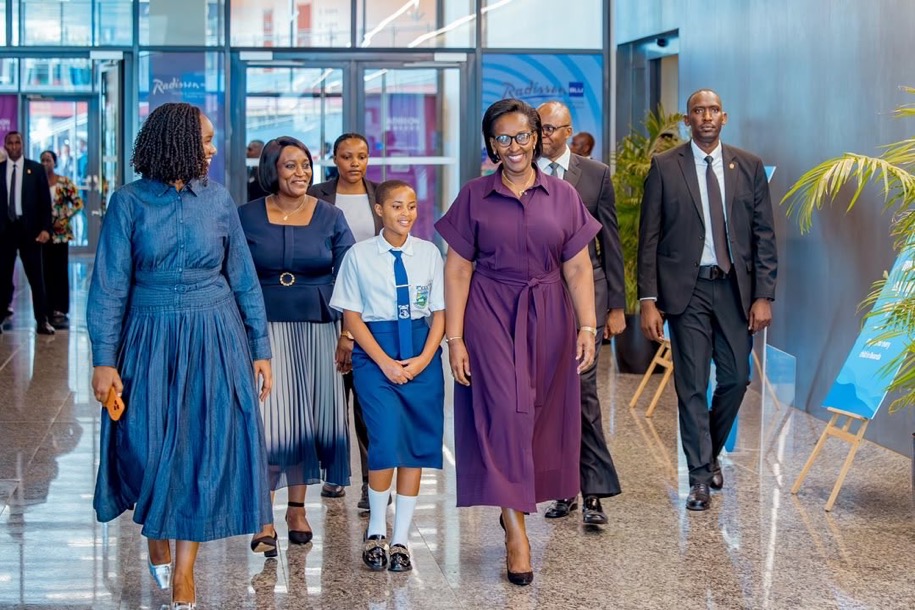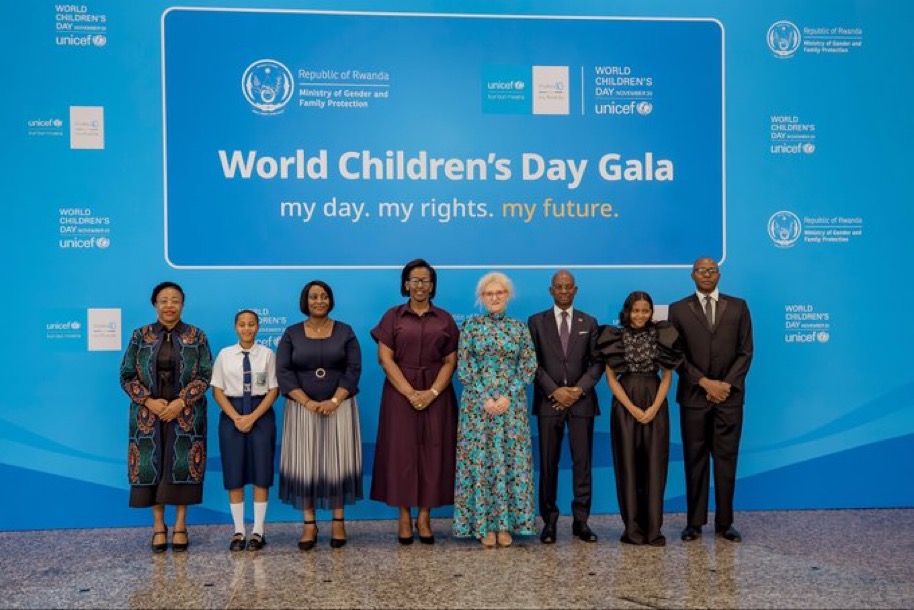
Kigali, Rwanda — Rwanda’s First Lady, Mrs Jeannette Kagame, has celebrated four decades of partnership between Rwanda and the United Nations Children’s Fund (UNICEF), highlighting the country’s remarkable progress in child survival, education, healthcare and social protection while calling for sustained investment in the well-being and future of every child.
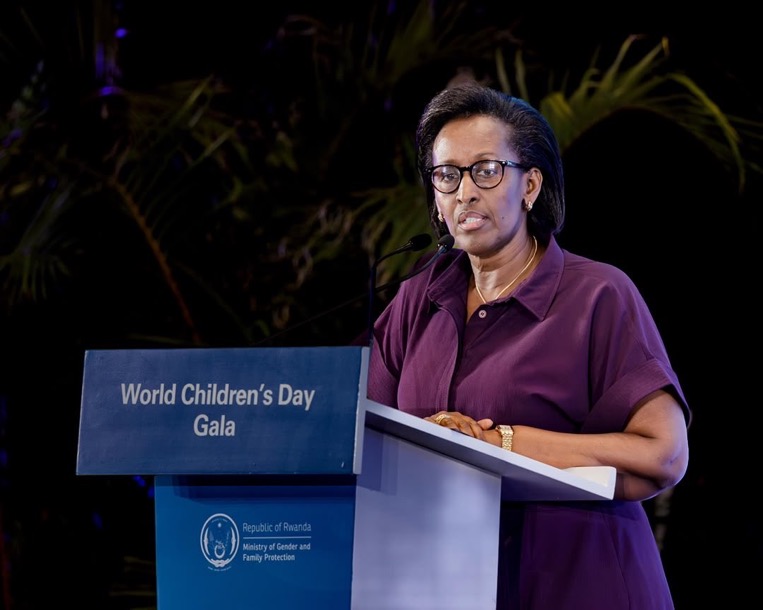
Speaking at a commemorative ceremony held in Kigali on November 20, 2026, marking UNICEF Rwanda’s 40th anniversary alongside World Children’s Day, the First Lady recognised the collective achievements of the Rwandan government, international development partners, civil society organisations and local communities in advancing children’s rights.
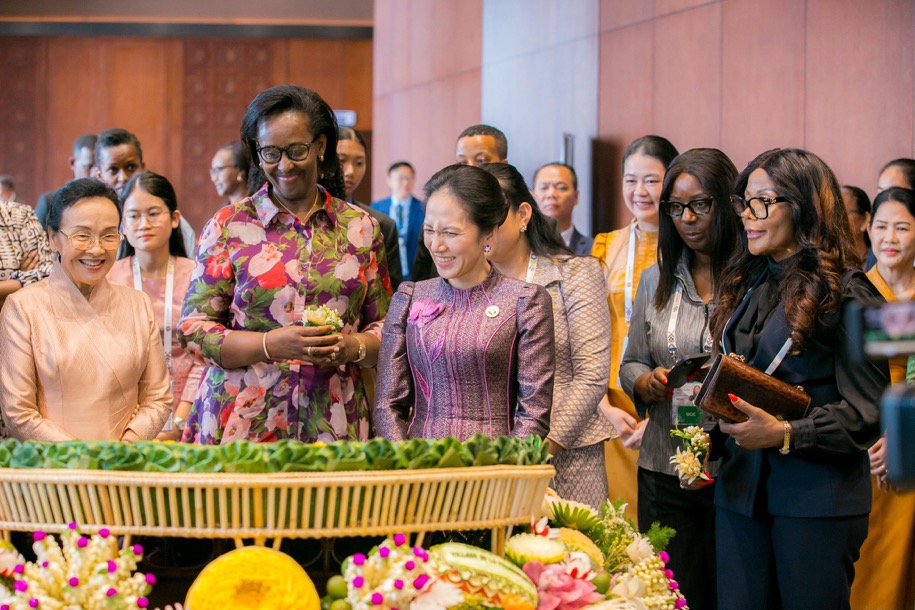
The event brought together senior government officials, United Nations representatives, development partners, community leaders and children to reflect on Rwanda’s achievements in improving the lives of younger generations.
In her address, Mrs Kagame described the relationship between Rwanda and UNICEF as an enduring partnership that has accompanied the country through profound historical challenges and an extraordinary period of national reconstruction.
She emphasised that Rwanda’s progress in reducing child mortality, expanding access to primary education, supporting girls’ educational opportunities and addressing childhood malnutrition reflects decades of coordinated national policies and international cooperation.
Reflecting on the country’s transformation, the First Lady stated:
“Rwanda’s story and UNICEF’s story have grown together. From the darkest moments in our history, to the rebuilding, to the Rwanda we see today, a Rwanda where child mortality has fallen dramatically, where nearly every child goes to primary school, where girls stay in school, where stunting is being fought village by village, where children are no longer invisible.”
Her remarks underscored the importance of sustained collaboration in building resilient communities and ensuring that children remain central to Rwanda’s national development agenda.
The First Lady also paid particular attention to the longstanding cooperation between UNICEF and Imbuto Foundation, an organisation she established to promote opportunities for vulnerable communities, particularly women, children and young people.
For more than two decades, the two organisations have collaborated on initiatives designed to strengthen educational opportunities, improve adolescent health, support young mothers and empower young people to achieve their potential.
Their cooperation has contributed to programmes encouraging girls to remain in school, helping adolescent mothers resume their education and promoting early childhood development.
Mrs Kagame acknowledged the complementary contributions of both institutions, highlighting Imbuto Foundation’s understanding of Rwandan communities and UNICEF’s international expertise, technical resources and evidence-based approaches.
She presented the partnership as an example of how locally grounded leadership and international development cooperation can generate lasting improvements in the lives of children and families.
Beyond celebrating institutional achievements, the First Lady drew attention to the human impact of four decades of investment in children’s welfare.
She reflected on generations of Rwandans whose lives have been transformed through vaccination, access to education, improved healthcare and stronger child protection systems.
Many children who benefited from earlier interventions have since become parents, educators, healthcare professionals and community leaders, illustrating the long-term social and economic significance of investing in childhood development.
The anniversary also provided an opportunity to recognise Rwanda’s broader transformation in the decades following the 1994 Genocide against the Tutsi.
Through national reconstruction, institutional development and sustained investment in human capital, Rwanda has placed education, public health, gender equality and social inclusion among its development priorities.
These efforts have helped establish a stronger foundation for children’s participation in the country’s social and economic future.
However, Mrs Kagame stressed that progress achieved over the past four decades should not diminish the responsibility to address remaining challenges.
She encouraged continued action to ensure that every child, regardless of family circumstances or socioeconomic background, can access quality education, appropriate healthcare, protection and opportunities for personal development.
Her message placed particular emphasis on recognising children not simply as future leaders but as individuals whose rights, aspirations and contributions deserve attention today.
Addressing young people directly, she encouraged them to pursue their ambitions confidently, demonstrate generosity towards others and recognise their ability to contribute meaningfully to society.
She also reminded parents, policymakers, educators and development partners that protecting children’s rights requires continuous commitment rather than occasional institutional initiatives.
The celebration coincided with World Children’s Day, observed internationally on November 20 to promote children’s rights and encourage greater public awareness of the challenges affecting young people.
This year’s gathering in Kigali highlighted the importance of ensuring that children are heard, protected and empowered to participate in decisions affecting their lives.
The occasion also recognised the contributions of artists and cultural performers, whose participation reflected the role of creativity, cultural expression and community engagement in promoting social cohesion and emotional well-being.
As UNICEF Rwanda enters its fifth decade, the anniversary represents both recognition of historical achievements and an opportunity to strengthen cooperation around emerging development priorities.
Continued attention to childhood nutrition, inclusive education, adolescent empowerment, mental health, healthcare accessibility and protection from exploitation will remain important to advancing sustainable development.
For Rwanda, the next chapter of cooperation with UNICEF offers an opportunity to consolidate existing achievements while expanding programmes that respond to the evolving needs of children and families.
Four decades after UNICEF began its work in Rwanda, the anniversary stands as a reminder that meaningful development is built through sustained partnerships, shared responsibility and an enduring commitment to ensuring that every child has the opportunity to survive, learn, thrive and fulfill their potential.