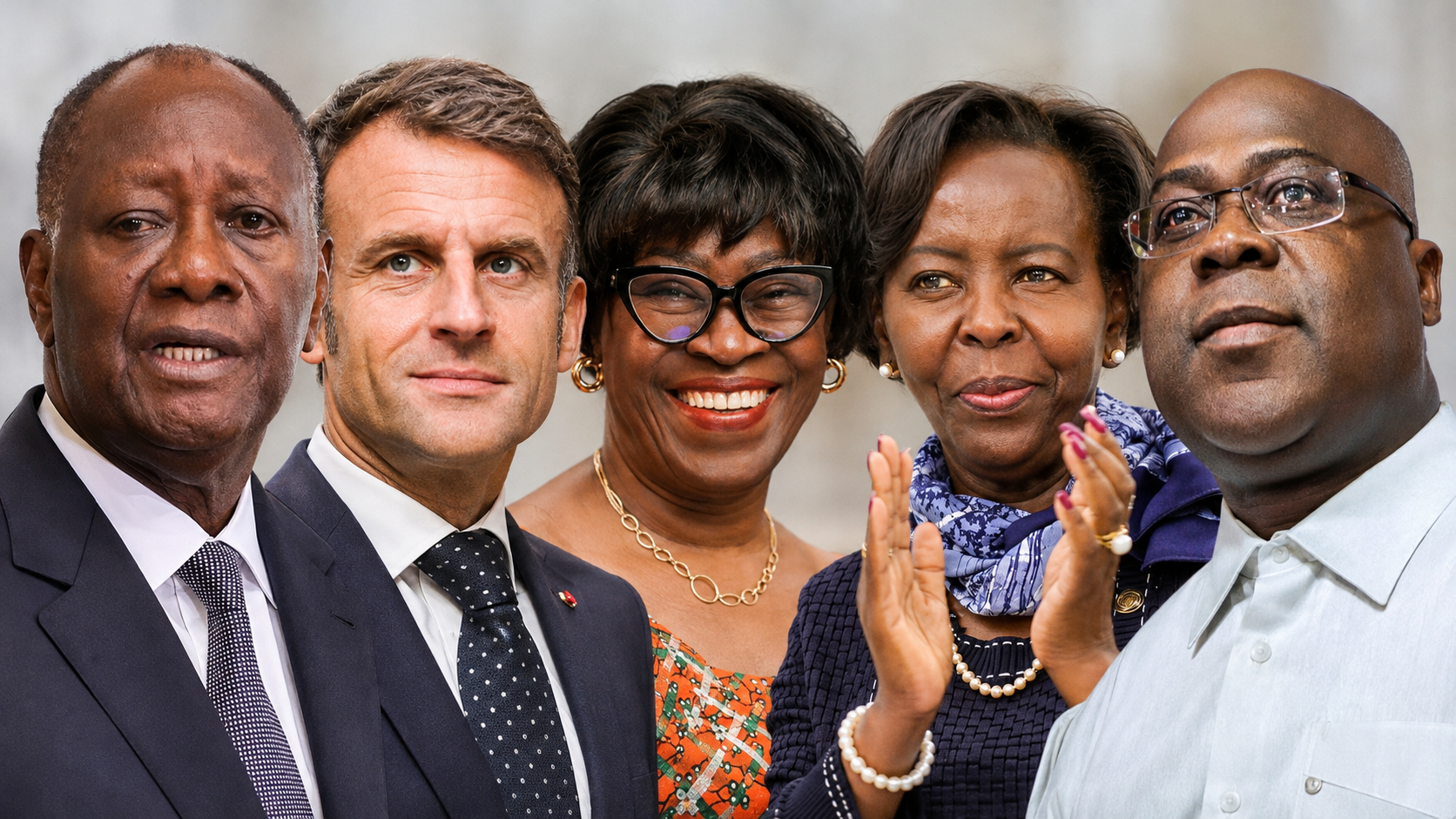
PARIS, FRANCE — French President Emmanuel Macron and Côte d’Ivoire’s President Alassane Ouattara are reportedly intensifying diplomatic efforts to prevent Democratic Republic of Congo (DRC) President Félix Tshisekedi from suffering a potentially damaging political defeat as Rwanda’s Louise Mushikiwabo approaches a decisive election for the leadership of the International Organisation of La Francophonie (OIF).
The diplomatic manoeuvring comes ahead of the 20th Francophonie Summit, scheduled for November 14–16, 2026, in Phnom Penh, Cambodia, where member states are expected to determine the organisation’s next Secretary-General.
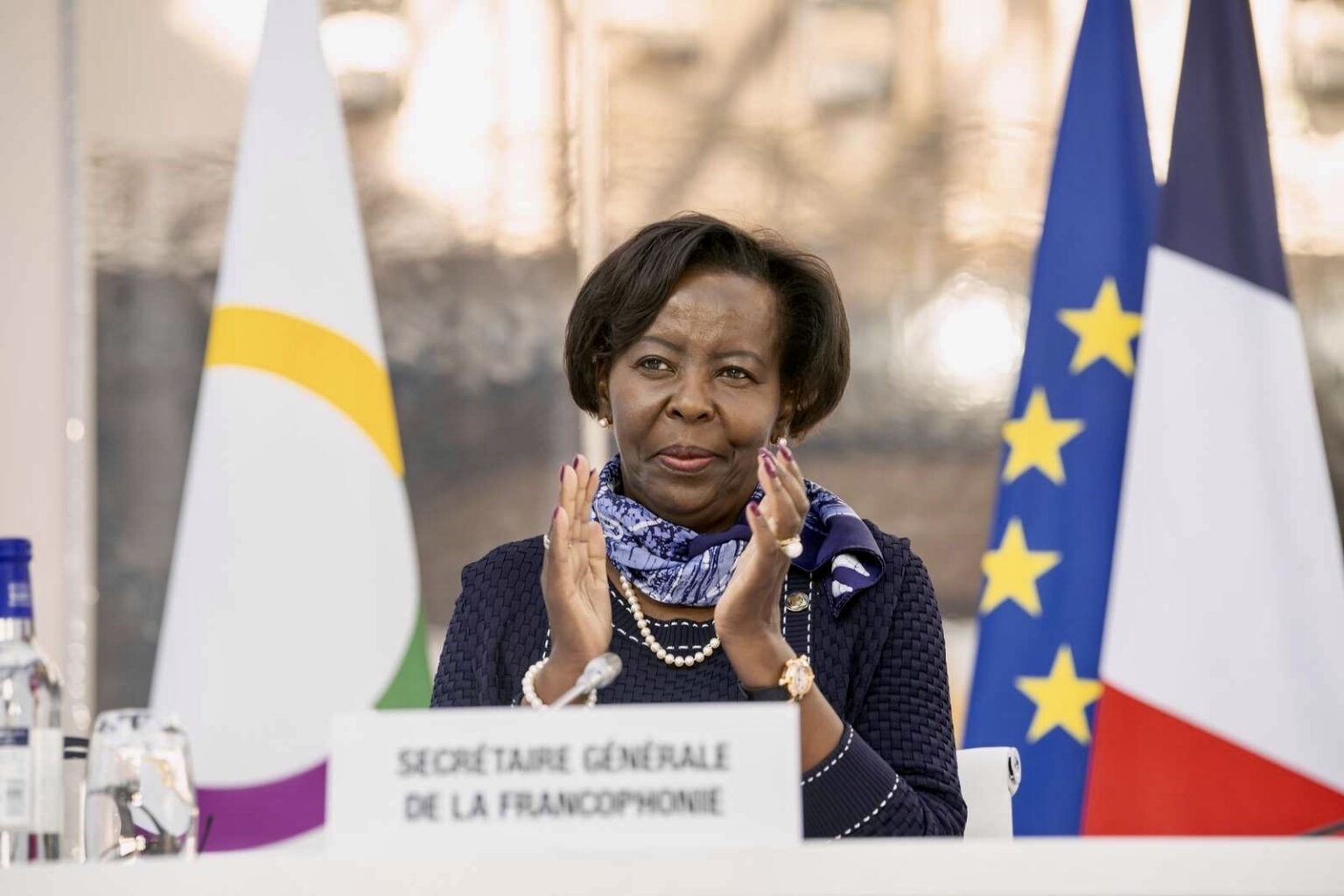
Mushikiwabo, who has led the organisation since January 2019, is seeking a third term. Her candidacy has become the centre of an increasingly sensitive diplomatic contest involving Kinshasa, Paris and several influential African capitals.
According to reporting published by Jeune Afrique on November 9, Macron and Ouattara are concerned that Tshisekedi’s campaign to prevent Mushikiwabo’s re-election could culminate in a significant diplomatic setback for the Congolese president.
A Leadership Contest with Wider Diplomatic Consequences
What might ordinarily have been a routine institutional leadership election has developed into a contest reflecting broader political tensions within the French-speaking international community.
The Congolese government has openly opposed Mushikiwabo’s continuation as Secretary-General, supporting an alternative candidacy as part of its efforts to influence the organisation’s future leadership.
Kinshasa has backed Juliana Lumumba, daughter of Patrice Lumumba, the DRC’s first prime minister and a prominent figure in African independence history.
However, the Congolese candidate reportedly faces difficulties securing sufficient international support to challenge Mushikiwabo effectively.
Political assessments cited by Jeune Afrique suggest that questions surrounding Lumumba’s candidacy, including its political motivations and presentation to member states, have complicated Kinshasa’s efforts to build a competitive diplomatic coalition.
The publication also reported that her June 30, 2026, presentation before Francophonie foreign ministers did not generate the momentum needed to substantially strengthen her campaign. For Tshisekedi, the implications extend beyond the outcome of a single election.
A decisive victory for Mushikiwabo could underscore Rwanda’s continued diplomatic influence within the Francophone community while raising questions about Kinshasa’s ability to mobilise international support for its preferred leadership choices.
France and Côte d’Ivoire Seek to Prevent a Diplomatic Confrontation
Paris and Abidjan appear particularly concerned about the possibility that an unsuccessful campaign against Mushikiwabo could further complicate relations between Kinshasa and the Francophonie institution.
According to the November 9 reporting, Macron and Ouattara have explored diplomatic approaches intended to reduce the political consequences of a potential defeat for Tshisekedi.
The issue has reportedly acquired additional urgency following indications that the Congolese government could reconsider its membership in the organisation if Mushikiwabo secures another mandate.
Such a decision would carry implications for an institution that promotes cooperation in education, culture, governance, economic development and the French language.
France has consequently maintained diplomatic engagement with Congolese authorities in an effort to prevent the leadership election from escalating into a broader institutional dispute.
The matter was reportedly discussed during French Foreign Minister Jean-Noël Barrot’s October 2, 2026, visit to Kinshasa, where he met President Tshisekedi.
While the precise substance of those exchanges has not been independently established, the reported discussions illustrate the importance Paris attaches to maintaining institutional cohesion within the Francophonie.
Opposition Candidates Consider a Unified Strategy
Another significant development involves discussions about whether candidates competing against Mushikiwabo could consolidate their support behind a single challenger.
The names under consideration reportedly include Juliana Lumumba of the Democratic Republic of Congo, Dacian Cioloș of Romania and Coumba Ba of Mauritania.
Such a strategy could potentially reshape the electoral contest by reducing divisions among member states seeking alternative leadership. However, the political calculations remain complicated.
Support for Cioloș, a European candidate, could create an uncomfortable diplomatic dilemma for Tshisekedi.
Backing his candidacy against Mushikiwabo would place the Congolese president in a position where his campaign could contribute to replacing an African woman with a European man at the head of a major international organisation.
That possibility could generate political criticism, particularly among African constituencies that regard representation in international leadership as an important element of diplomatic influence.
By contrast, supporting another African candidate would avoid that particular concern but would not necessarily guarantee sufficient electoral support to defeat Mushikiwabo.
Mushikiwabo’s Leadership and Africa’s Diplomatic Standing
Louise Mushikiwabo assumed leadership of the OIF in January 2019 after her election in 2018. She subsequently secured a second mandate in 2022.
Her tenure has placed Africa prominently within an international institution connecting French-speaking countries and governments across Africa, Europe, the Americas, Asia and the Pacific.
As Secretary-General, Mushikiwabo has represented an organisation whose responsibilities extend beyond linguistic cooperation to include education, cultural exchange, democratic governance, youth engagement and economic partnerships.
Her pursuit of another mandate comes at a time when the Francophonie faces important questions concerning its global relevance, institutional effectiveness and responsiveness to the priorities of its diverse membership.
For Africa, her continued leadership would represent another significant achievement in international diplomacy and reinforce the country’s visibility in multilateral institutions.
For the wider Francophone community, the election presents an opportunity to evaluate competing visions for the organisation’s future.
Tshisekedi Faces a Difficult Political Calculation
The central challenge confronting Tshisekedi is whether continued opposition to Mushikiwabo offers sufficient diplomatic benefits to justify the political risks.
A campaign that fails to secure the necessary support could expose limitations in Kinshasa’s regional and international coalition-building efforts.
Conversely, a decision to moderate its opposition could help preserve working relationships with France, Côte d’Ivoire and other influential Francophonie members.
The prospect of the DRC withdrawing from the organisation adds another dimension to the debate.
Such a withdrawal would represent a substantial political decision for one of the world’s largest French-speaking countries and could affect its participation in important international cooperation programmes.
Nevertheless, the possibility remains a reported political position rather than a confirmed withdrawal decision.
A Defining Moment for Francophone Diplomacy
With the Phnom Penh summit approaching, diplomatic attention is increasingly focused on whether the leadership contest will produce a negotiated understanding or proceed through a competitive electoral process.
The reported intervention of Macron and Ouattara reflects concerns that the election could have consequences extending well beyond the identity of the next Secretary-General.
Mushikiwabo enters the final stage of the contest as a prominent incumbent with substantial international experience, while competing candidates continue efforts to strengthen their diplomatic support.
For Tshisekedi, the coming days could prove particularly consequential as he weighs his opposition to the Rwandan diplomat against the wider interests of the Democratic Republic of Congo.
For the Francophonie, the election will test its capacity to manage political differences while maintaining cooperation among its member states.
As international attention turns toward Cambodia, the central question is no longer simply who will lead the Francophonie, but whether the outcome will strengthen diplomatic cooperation or deepen divisions among some of its most influential members.
The USA New Times | International News & Diplomatic Affairs.