WASHINGTON, D.C. — African diaspora communities have emerged as an important focus of attention following the November 3, 2026, United States midterm elections, with Nigerian- and Somali-American political figures drawing recognition for their participation in congressional, state and local contests.
Reports circulating after the elections have highlighted four Nigerian-American politicians and a wider group of Somali-American candidates, including U.S. Representative Ilhan Omar of Minnesota.
The developments reflect the increasing visibility of Americans with African heritage in the country’s political institutions, where immigrant communities and their descendants are pursuing leadership positions and contributing to public policy.
Nigerian-Americans Expand Their Political Influence
Nigerian-American politicians have attracted attention in Maryland, Texas, Washington, D.C., Pennsylvania and Georgia.
Among the prominent figures is Will Jawando, a Montgomery County political leader whose career has focused on education, economic opportunity and community development.
Junior Ezeonu, a Nigerian-born political figure with roots in Anambra State, represents a younger generation of African immigrants pursuing public office in the United States.
Oye Owolewa, a pharmacist and politician of Nigerian descent, has served as Washington, D.C.‘s shadow representative to Congress, contributing to the district’s campaign for full congressional representation.
In Pennsylvania, Carol Kazeem has established herself in state politics, representing communities in Delaware County. Meanwhile, Segun Adeyina, a Nigerian-born Georgia state legislator, has contributed to the growing presence of African immigrants in American government.
Social media reports have described electoral successes involving these politicians, although their individual November 3 results require confirmation through official election records.
Their political careers nevertheless demonstrate the increasing participation of Nigerian-Americans in American democracy.
Somali-Americans Strengthen Their Political Presence
Somali-American political representation has also attracted considerable attention following the midterm elections.
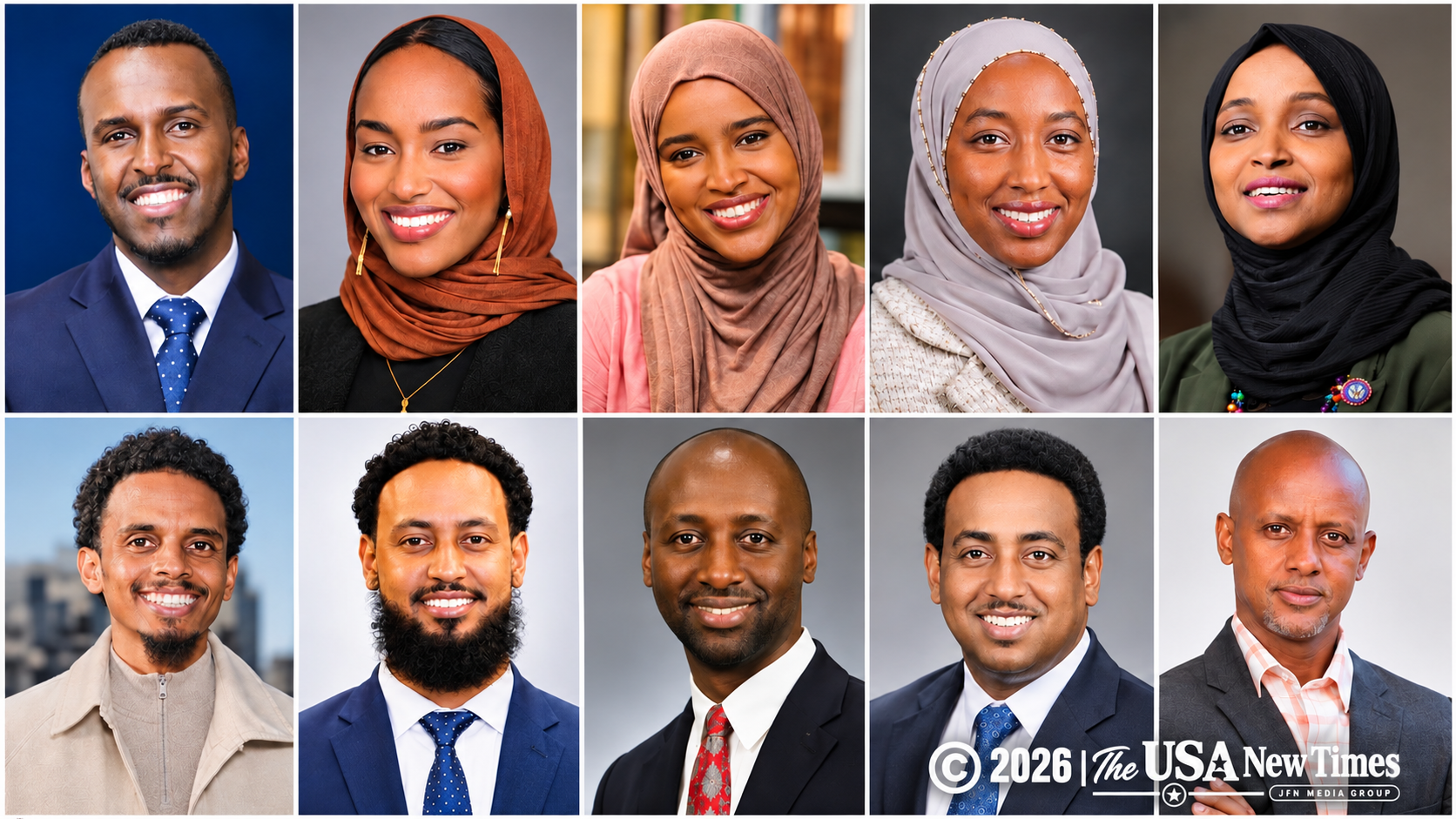
A widely circulated social media post reported that nine Somali-American candidates had won seats in state legislatures across Minnesota, Ohio and Oregon, in addition to the reported re-election of Congresswoman Ilhan Omar.
The claim, accompanied by photographs of ten individuals, has generated interest in the expanding political participation of Somali-American communities.
However, the reported number of successful candidates and their respective offices have not yet been independently verified against official state election results.
Omar, who first entered Congress in 2019, has become one of the most internationally recognised Somali-American political figures. Her career represents a significant milestone in the participation of East African immigrant communities in American national politics.
Minnesota, home to one of the largest Somali-American populations in the United States, has developed an increasingly active Somali-American political community.
Somali-Americans have also pursued public office in other states, demonstrating that their political engagement extends beyond traditional immigrant population centres.
Their growing involvement in electoral politics reflects a broader commitment to civic participation, community representation and public leadership.
African Heritage and the Changing Face of American Democracy
The political participation of Nigerian- and Somali-Americans illustrates the changing composition of American leadership.
African immigrants and their descendants have contributed to the United States through healthcare, education, technology, entrepreneurship, military service and public administration.
Their increasing involvement in electoral politics adds another dimension to those contributions.
For African diaspora communities, political representation offers opportunities to participate directly in decisions affecting education, housing, healthcare, economic development and community welfare.
It also demonstrates how immigrant populations can become active participants in the democratic institutions of their adopted country.
The political engagement of African-Americans with direct family connections to Nigeria, Somalia and other African nations further strengthens cultural and social relationships between the United States and the African continent.
A New Generation of African-American Leadership
The visibility of African diaspora politicians carries particular significance for younger generations.
For children of African immigrants growing up in American communities, seeing political leaders with similar family histories can broaden perceptions of opportunity and public service.
These developments also demonstrate that American political participation increasingly reflects the country’s cultural diversity.
Although electoral victories must be established through verified results, the broader growth of African diaspora political leadership is evident in the expanding number of candidates, elected officials and community leaders participating in American government.
The increasing presence of Nigerian- and Somali-Americans in political life represents more than individual ambition. It reflects the continuing integration of African diaspora communities into the institutions shaping America’s future.
As the United States enters another political chapter, the participation of Americans with African roots highlights the enduring importance of civic engagement, democratic opportunity and inclusive representation.
For Africa and its global diaspora, these developments demonstrate the potential for immigrant communities to contribute meaningfully to political leadership while maintaining connections to their cultural heritage.