WASHINGTON, D.C. |
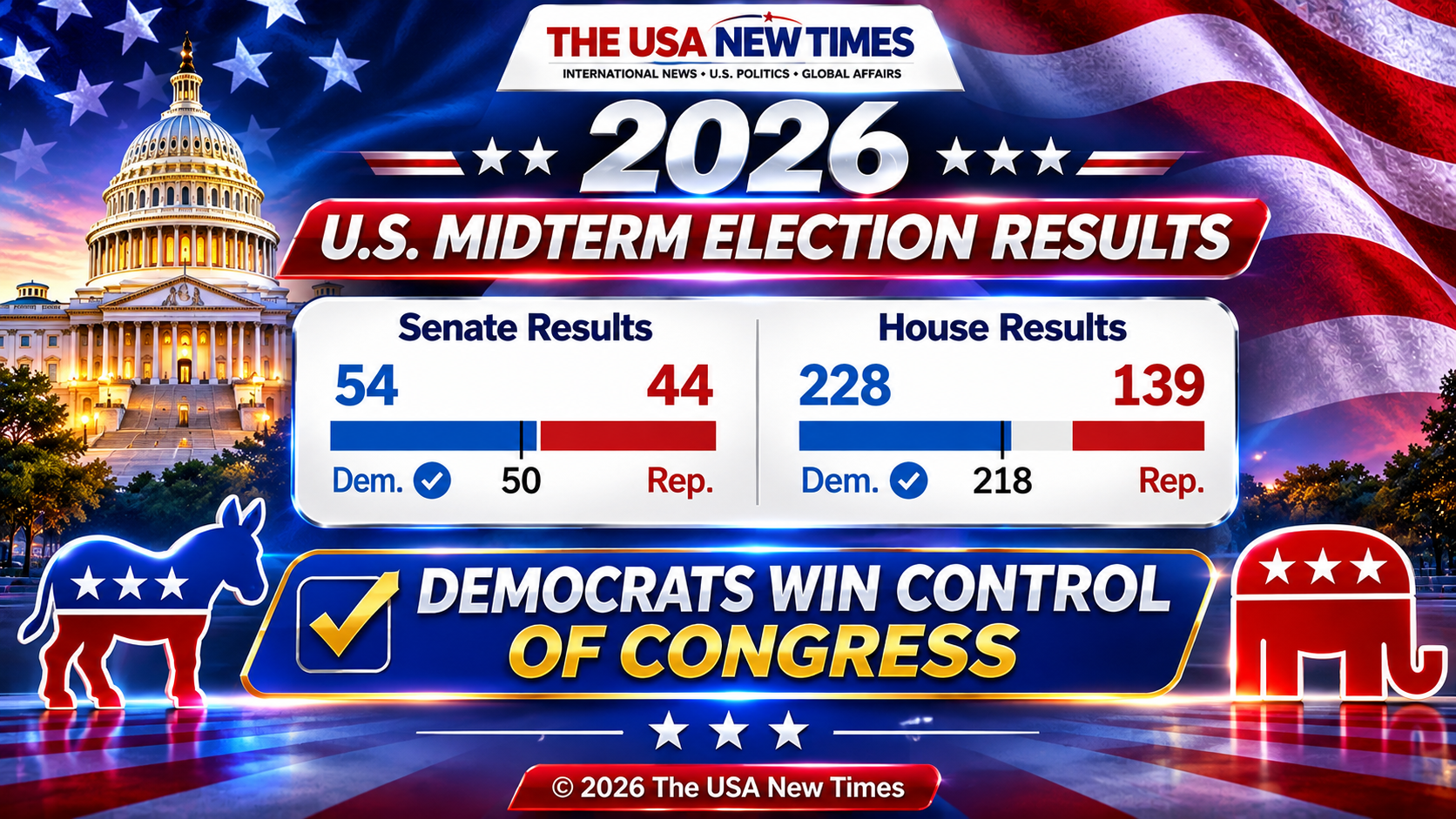
The United States has entered a new political chapter following Tuesday’s midterm elections, with Democrats securing control of both chambers of Congress in a sweeping electoral victory that will significantly reshape Washington’s political landscape for the remainder of President Donald Trump’s second term.
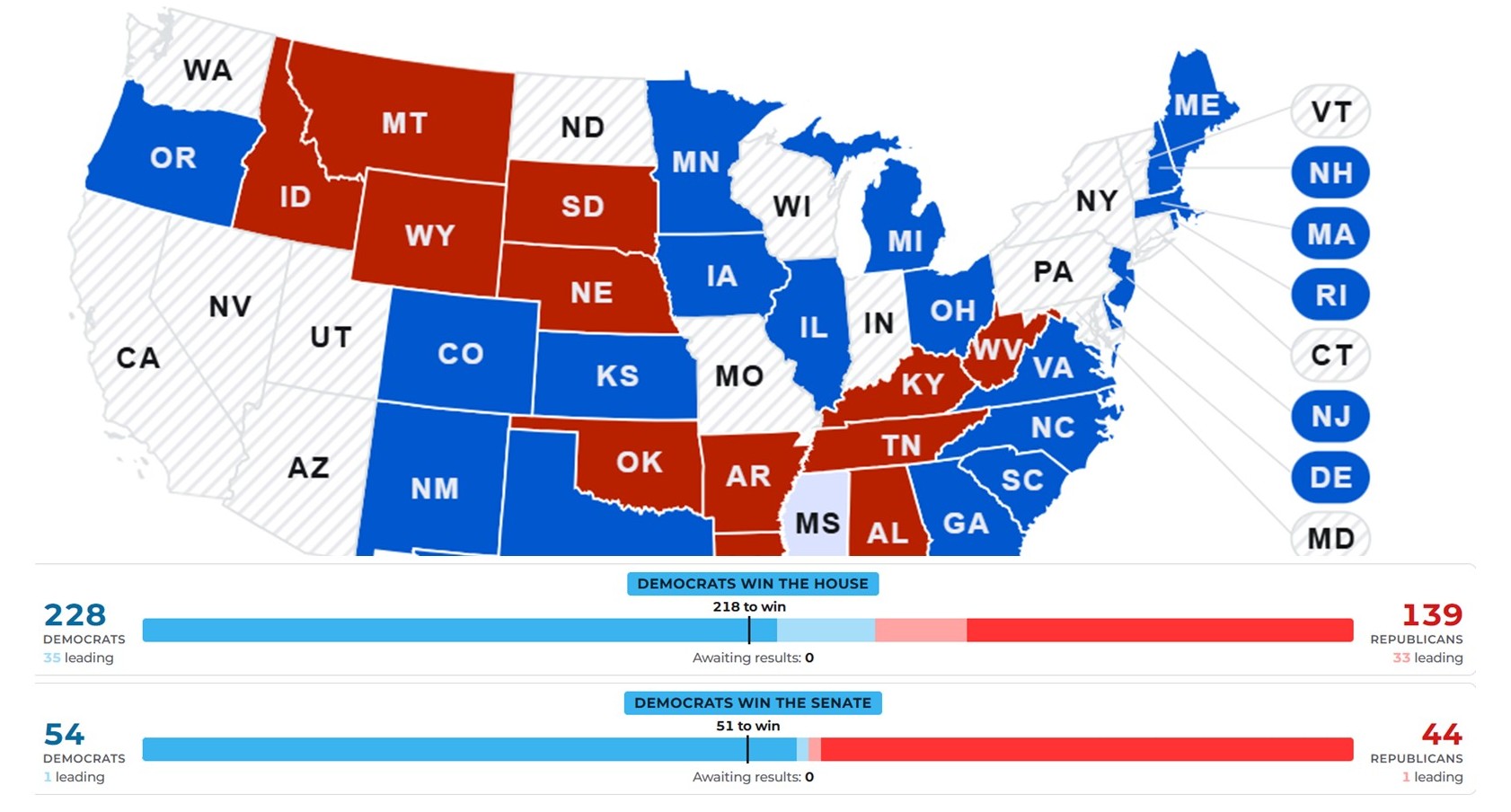
According to election projections reported by CNN and the Associated Press, Democrats captured the House of Representatives and regained the Senate after defeating Republican candidates in several closely watched races, including contests in traditionally conservative states.
The results represent a substantial political reversal for Republicans, who entered the elections seeking to preserve their congressional majorities and maintain legislative support for the Trump administration’s domestic and international priorities.
Millions of Americans participated in elections involving all 435 seats in the House of Representatives, 35 Senate contests and 36 governorships, alongside numerous state and local offices.
While several individual races remained unresolved early Wednesday, the projected Democratic victories were sufficient to establish control of Congress.
Democrats Capture Both Chambers of Congress
The most consequential development emerged from the Senate, where Democrats overturned Republican-held seats in seven states: Iowa, Kansas, Maine, North Carolina, Ohio, South Carolina and Texas.
These victories gave Democrats the seats necessary to secure a Senate majority, ending Republican control of the chamber.
Among the most significant results was the defeat of Republican Senator Susan Collins in Maine by Democrat Troy Jackson, bringing an end to nearly three decades of Collins’s Senate service.
In Ohio, former Democratic Senator Sherrod Brown returned to the political forefront by defeating Republican Senator Jon Husted.
North Carolina also shifted toward the Democrats, with former Governor Roy Cooper defeating Republican Michael Whatley in the contest to replace retiring Senator Thom Tillis.
In Texas, Democrat James Talarico defeated Republican Ken Paxton, marking a major political breakthrough in a state long dominated by Republican candidates in statewide elections.
Kansas produced another historic result as Democrat Adam Hamilton defeated Republican Senator Roger Marshall, delivering the party its first Senate victory in the state since 1932.
Democrats also secured victories in Iowa and South Carolina, further consolidating their Senate majority.
Meanwhile, Democratic candidates gained sufficient seats in the House of Representatives to regain control of the chamber, although counting continued in several congressional districts.
Historic Victories Reshape State Leadership
Beyond Congress, the elections produced important changes in state governments, including several historic gubernatorial victories.
In Texas, Democrat Gina Hinojosa defeated Republican Governor Greg Abbott, ending more than three decades without a Democratic victory in a statewide election in the state.
Georgia also experienced a significant political transition as former Atlanta Mayor Keisha Lance Bottoms won the governorship, becoming the first Black woman elected governor of a U.S. state.
In Florida, Republican Congressman Byron Donalds secured the governorship, becoming the first Black Republican elected to lead a state.
Democrat Amy Acton won Ohio’s gubernatorial contest, defeating Republican Vivek Ramaswamy, while Democrat David Crowley secured Wisconsin’s governorship.
Other prominent Democratic governors, including Wes Moore of Maryland, Josh Shapiro of Pennsylvania and J.B. Pritzker of Illinois, won re-election.
The outcomes demonstrate that although Democrats achieved substantial nationwide gains, Republicans retained important political positions in several states.
Economic Pressures and National Policies Influence Voters
Economic concerns played a central role in the elections, particularly household expenses, inflation, energy prices and employment opportunities.
Immigration policy, federal spending, healthcare affordability and national security also influenced the political debate.
CNN’s election analysis identified declining Republican support among several demographic groups that had contributed to President Trump’s 2024 electoral victory.
The results suggest that economic pressures and dissatisfaction with elements of federal policy contributed to Democratic gains across competitive districts and states.
Nevertheless, the elections also revealed important regional differences, with Republican candidates maintaining support in several conservative constituencies.
What the Results Mean for President Trump
Democratic control of Congress will introduce substantial legislative and political challenges for President Trump during the final two years of his administration.
The new congressional majority will possess greater authority over federal spending negotiations, legislative priorities, government oversight and investigations involving executive branch activities.
Democratic control of the Senate will also influence the confirmation process for senior administration officials and federal judicial appointments.
However, the election results do not change the presidency itself. President Trump remains in office, and his administration will continue exercising executive authority within the constitutional framework.
The emerging political environment will require greater negotiation between the White House and congressional leadership on major domestic and international issues.
Global Implications for U.S. Foreign Policy
The outcome carries implications beyond American domestic politics, particularly for countries maintaining strategic, economic and diplomatic partnerships with Washington.
For African nations, including Rwanda, congressional leadership changes may influence foreign assistance, investment initiatives, security cooperation and diplomatic engagement.
American involvement in peace initiatives across Africa’s Great Lakes region will remain an important area of international interest, particularly as regional governments and diplomatic partners continue working toward sustainable security arrangements.
Relations between the United States and Israel will also remain a significant component of Washington’s foreign policy agenda, with congressional decisions influencing security assistance and diplomatic priorities.
Although changes in congressional leadership may alter legislative approaches, the United States continues to maintain established diplomatic relationships and international commitments.
A Defining Moment Ahead of the 2028 Presidential Election
The 2026 midterms have significantly changed the political balance in Washington and established a new environment for the next presidential election.
For Democrats, the victories provide an opportunity to demonstrate legislative leadership and strengthen their political position ahead of 2028.
For Republicans, the results present an opportunity to reassess electoral strategies, address voter concerns and rebuild support in competitive states.
The elections also illustrate the capacity of American voters to influence national leadership through democratic institutions.
As outstanding ballots continue to be counted and results move toward official certification, the broader political outcome is already clear: Democrats have secured control of Congress, creating a divided federal government that will shape American policymaking through the remainder of President Trump’s second term.
The coming months will determine how the White House and the incoming congressional leadership navigate their competing priorities while addressing the economic, security and diplomatic challenges facing the United States.
© 2026 The USA New Times | U.S. Politics & International Affairs