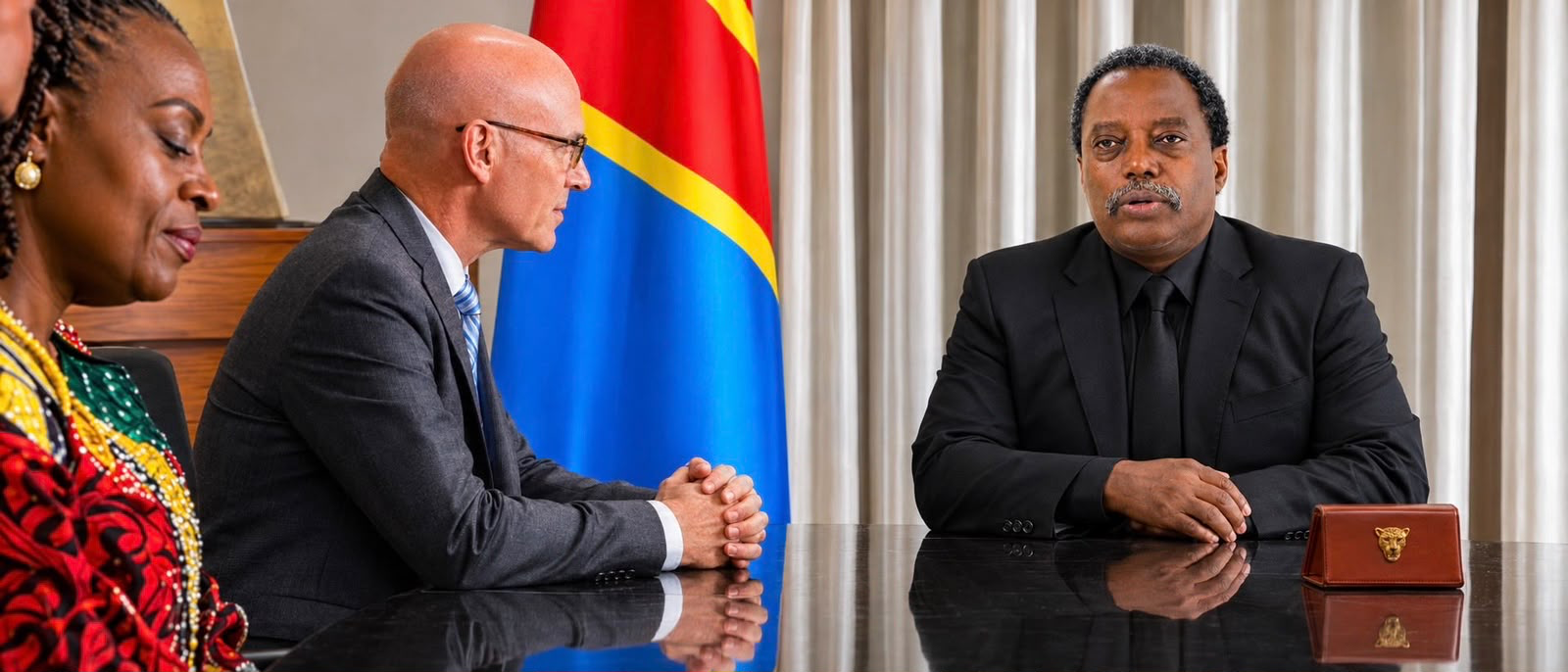
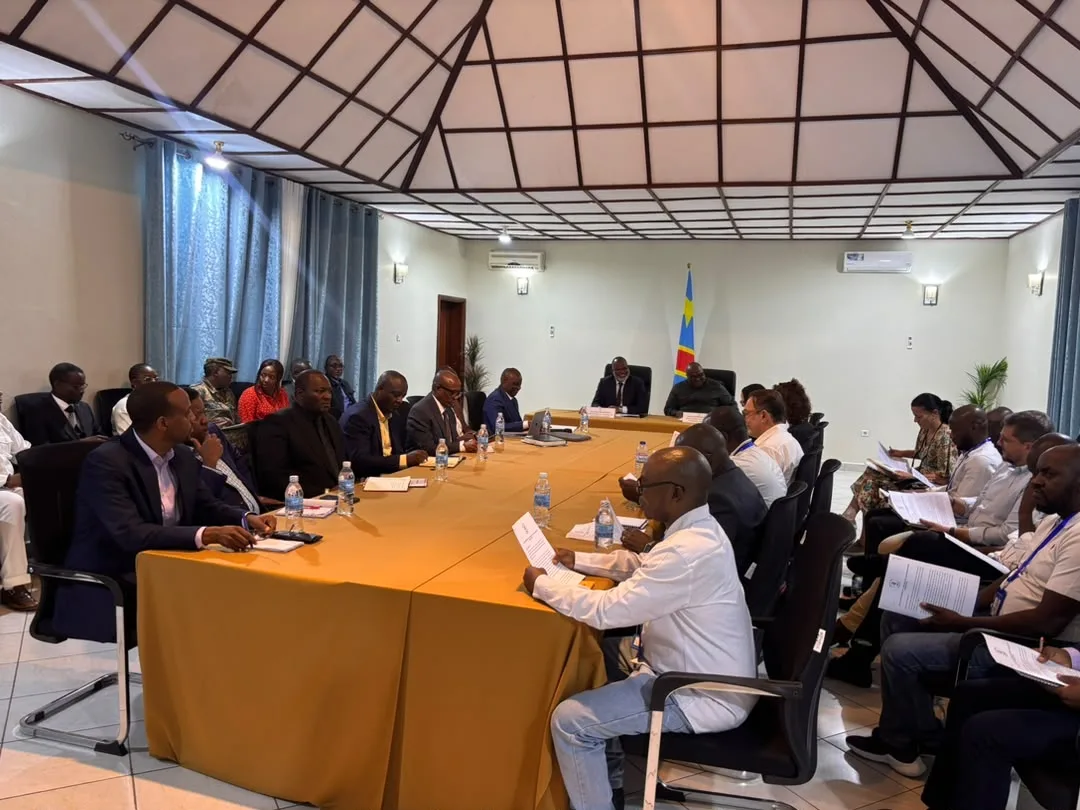
GOMA — The leadership of the Front for the Refoundation of the Nation (FRN) met with representatives of the humanitarian community in Goma on Friday, November 6, to address a rapidly deteriorating crisis in the Uvira and Mwenga highlands. Proposing a range of aid delivery methods, the movement is urgently calling for the opening of humanitarian corridors to Minembwe, warning that civilians are actively dying of starvation under an imposed blockade.
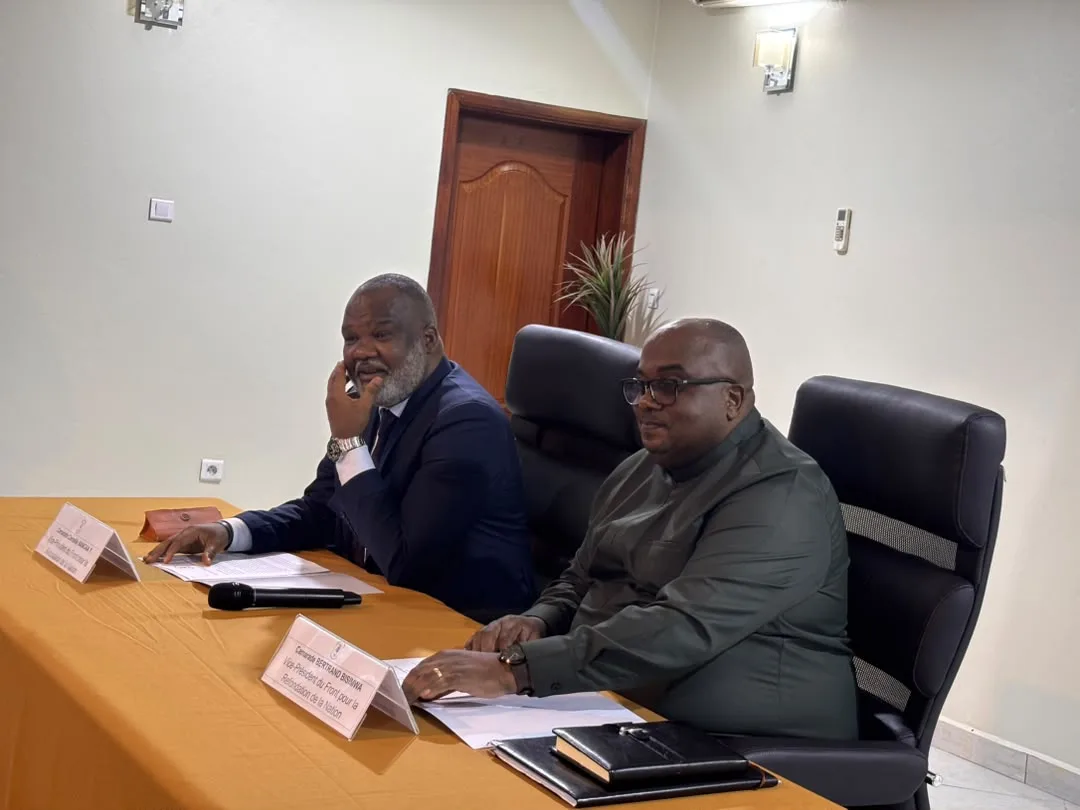
Following the discussions, FRN Vice-President Corneille Nangaa addressed the press to outline the movement's deep concerns and detail the proposed solutions, which include road convoys, small aircraft deliveries, and targeted airdrops.
The high-level meeting was attended by FRN Vice-Presidents Corneille Nangaa and Bertrand Bisimwa, Deputy Secretary-General Benjamin Mbonimpa, Moïse Nyarugabo, and the Vice-Governor of South Kivu in charge of finance, economy, development, and humanitarian affairs.
Prolonged Shortages and Starvation
The FRN is raising the alarm over what it describes as a catastrophic situation in Minembwe. Nangaa stated that residents have been subjected to severe supply restrictions for several months, cutting them off from basic necessities.
“No salt, no soap, not even oil, and there's nothing left to eat,” Nangaa told reporters.
He asserted that residents are now dying of starvation rather than from the direct consequences of fighting, with women, children, and the elderly bearing the brunt of the vulnerability. Highlighting the gravity of the crisis, Nangaa recounted the recent deaths of two women who had just given birth. According to his account, they collapsed while desperately searching for food and died after being carried away on makeshift stretchers.
“This blockade does not affect any combatants, but it affects the civilian population indiscriminately,” he argued.
Kinshasa and Allies Implicated
The FRN directly attributes these severe restrictions to Congolese government forces and their regional allies. Nangaa specifically implicated the Armed Forces of the Democratic Republic of the Congo (FARDC), Burundian forces (FNDB), the Democratic Forces for the Liberation of Rwanda (FDLR), and the Wazalendo armed groups.
He also denounced the use of aerial assets, including drones, to enforce the blockade. According to the FRN, these restrictions have yielded no military results—such as capturing villages or recapturing territory—suggesting they are instead targeted directly at the civilian population.
Drawing stark historical parallels, Nangaa compared the starvation in Minembwe to the Biafran famine during the Nigerian Civil War in the late 1960s, and likened the confinement of the civilian population to a “Nazi-style concentration camp in the 1940s.” Through these comparisons, he called for immediate international intervention.
Proposed Routes for Relief
To address the immediate needs, the FRN has proposed several logistical solutions. The primary request is for humanitarian agencies to take the initiative and resume road convoys toward the high plateaus.
“In particular, we proposed that they take the initiative to deploy convoys by road,” Nangaa explained, acknowledging recent unspecified difficulties in delivering aid via these routes.
Should road access remain impossible, the FRN urged the examination of air-based solutions, specifically utilizing small aircraft capable of landing at the Minembwe airfield, or coordinating airdrops. Nangaa cited the World Food Programme (WFP) as an ideal partner possessing the necessary expertise for such operations, though no formal commitment from the WFP has been announced.
Doha Commitments and Appeals to Burundi
The FRN framed Friday's meeting as a vital step in preserving the ongoing peace process. Nangaa referenced discussions held this past April in Montreux, Switzerland, under the framework of the Doha process, pointing to a previously established protocol on humanitarian access that the FRN is now demanding be translated into concrete action.
The movement stated it is prepared to offer the necessary security guarantees to facilitate these corridors. “Our capabilities give us all the necessary guarantees to ensure that the humanitarian corridor is effective, to save human lives,” Nangaa assured.
On the diplomatic front, the FRN is urging the humanitarian community to press Burundian authorities. Nangaa singled out Burundian President Évariste Ndayishimiye, citing his responsibilities within the African Union, Burundi's observer role in the Doha process, and the direct involvement of Burundian forces in the conflict. The FRN believes an intervention by Bujumbura is critical to opening access routes and de-escalating tensions.
A Warning on Continued Restrictions
While reaffirming the FRN's commitment to the peace process, Nangaa issued a stern warning regarding the ongoing crisis.
When pressed by journalists on the movement's stance if the blockade continues, he stated, “We don't want to be forced to use other means,” emphasizing that the FRN's operational and technical capabilities remain “intact.”
While he did not specify what military or strategic actions might be considered, he made it clear that continued civilian deaths could force a shift in the FRN’s posture.
For now, the movement continues to engage with the Doha mediation team and humanitarian bodies. However, as the meeting in Goma concluded, while several supply routes were put forward, no confirmed operational agreement to deliver aid to Minembwe was announced.