Goma -
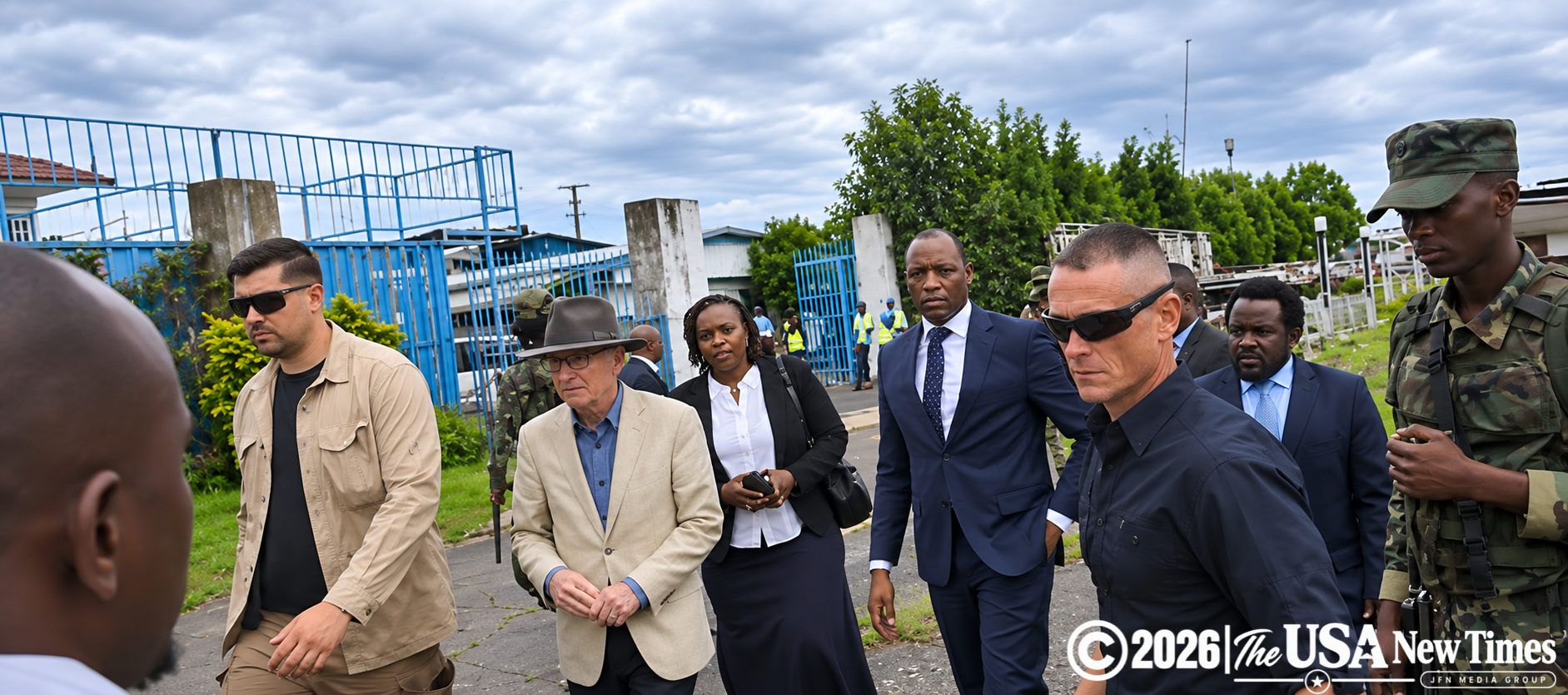
United Nations Special Representative James Swan arrived in Goma on Monday for a three-day diplomatic mission expected to include discussions with the leadership of the Front pour la Refondation de la Nation (FRN), amid renewed calls to dismantle the FDLR armed group, confront ethnic discrimination and address the governance failures contributing to decades of instability in eastern Democratic Republic of the Congo.
Swan, who also heads the United Nations Organization Stabilization Mission in the Democratic Republic of the Congo (MONUSCO), was received at Goma International Airport by Deputy Governor Manzi Willy, representing North Kivu Governor Bahati Musanga Erasto.
According to information released by the provincial administration, the UN diplomat is expected to engage with FRN representatives and other stakeholders on security developments, political conditions and prospects for resolving the prolonged conflict.
The visit comes as communities across eastern Congo continue to demand meaningful protection from armed violence, ethnic hostility and political exclusion.
Dismantling the FDLR Must Become a Central Peace Priority
The continued presence of the Democratic Forces for the Liberation of Rwanda (FDLR) remains one of the most serious obstacles to lasting peace and regional stability.
The armed group traces its origins to forces associated with perpetrators of the 1994 Genocide against the Tutsi in Rwanda. Its activities have contributed to longstanding security concerns affecting communities in eastern Congo and relations between the DRC and Rwanda.
A credible peace process must therefore prioritise the complete dismantling of the FDLR’s military structures, the disarmament of its combatants and accountability for individuals responsible for serious crimes.
Neutralising the threat posed by the FDLR must be pursued through lawful security measures, effective demobilisation programmes and coordinated regional mechanisms that protect civilians and prevent further violence.
The Kinshasa government has a fundamental responsibility to prevent cooperation between state security structures and armed groups implicated in attacks against civilians.
The United Nations must also ensure that its diplomatic engagement does not overlook the FDLR threat or permit armed organisations promoting ethnic hatred to undermine regional peace initiatives.
FRN Raises the Question of Equal Rights for All Congolese
The anticipated discussions between Swan and FRN representatives also bring attention to the movement’s stated opposition to ethnic discrimination, political exclusion and unequal treatment of Congolese communities.
FRN presents its political agenda as a response to longstanding grievances involving governance, citizenship, security and the treatment of communities in eastern Congo.
These concerns are particularly significant for Congolese Tutsi communities, including the Banyamulenge, whose members have experienced discrimination, hostility and disputes concerning their national identity and citizenship.
For decades, questions surrounding ethnic identity and belonging have complicated political relations and contributed to insecurity in parts of the country.
The government in Kinshasa bears responsibility for ensuring that every Congolese citizen enjoys equal constitutional protection, regardless of ethnicity, language, regional origin or political affiliation.
No citizen should face discrimination, intimidation or exclusion because of their ethnic identity.
FRN’s stated commitment to opposing discrimination deserves serious examination within a broader political dialogue. At the same time, all parties seeking a role in Congo’s future must demonstrate their commitment to civilian protection, equal citizenship and respect for international humanitarian law.
UN Must Reject Hate Ideology and Demand Accountability from Kinshasa
The United Nations cannot achieve lasting peace in eastern Congo without addressing the political environment that enables ethnic hostility, discriminatory rhetoric and the marginalisation of vulnerable communities.
Kinshasa must be held accountable for preventing hate speech, investigating discrimination and ensuring that public institutions serve all Congolese citizens equally.
Where government officials, political organisations or armed groups promote ethnic hostility, the international community must respond consistently, regardless of political affiliation.
The United Nations should maintain its independence from any political leadership or institution that encourages ethnic hatred, tolerates discrimination or obstructs accountability.
Such independence is essential to preserving the credibility of international mediation and ensuring that peace initiatives are not perceived as protecting powerful political interests at the expense of vulnerable populations.
MONUSCO’s longstanding presence in eastern Congo has also generated legitimate questions about the effectiveness of international peacekeeping efforts.
Despite more than two decades of UN engagement, communities continue to experience insecurity, displacement and repeated humanitarian emergencies.
Swan’s visit therefore provides an opportunity to reassess diplomatic priorities and strengthen efforts to confront the underlying causes of instability.
Lasting Peace Requires Security, Justice and Equal Citizenship
The future of eastern Congo cannot be secured through military operations alone.
Sustainable peace requires the dismantling of armed groups responsible for violence, credible political reforms, effective governance and constitutional guarantees protecting every Congolese citizen.
The FDLR threat must be addressed decisively, while the grievances of communities affected by discrimination and insecurity must receive serious political consideration.
The international community should also encourage transparent dialogue involving the Kinshasa government, FRN representatives, civil society organisations and affected communities, with civilian protection remaining the central priority.
For the United Nations, the challenge is to move beyond diplomatic engagement that produces limited improvements and support a peace framework capable of delivering measurable results.
The central message is clear: lasting peace in the Democratic Republic of the Congo requires dismantling the FDLR, ending ethnic discrimination, holding political leaders accountable and guaranteeing equal rights for every Congolese citizen.
As James Swan begins his diplomatic mission in Goma, the international community faces an important opportunity to advance a peace process founded on justice, security, inclusive governance and respect for human dignity.
Peace in eastern Congo will remain fragile unless the conditions that sustain armed violence and ethnic division are confronted through credible political action.
For the people of the Democratic Republic of the Congo, the ultimate objective must be a nation where citizenship is never questioned because of ethnicity, political authority is exercised without discrimination, and every community can live in security and dignity.