KAMPALA, Uganda | November 8, 2026
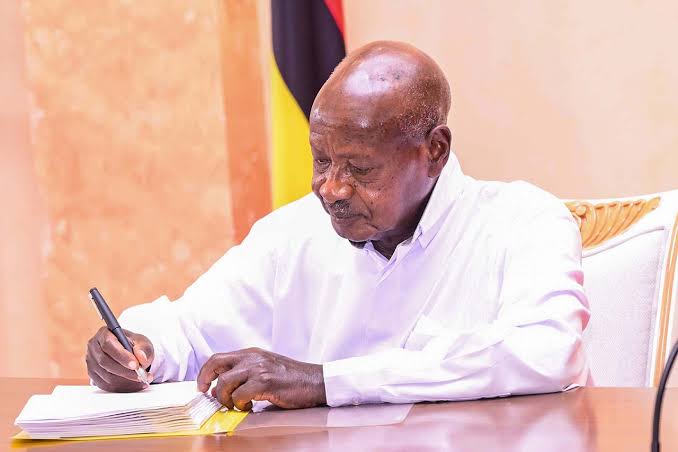
Ugandan President Yoweri Kaguta Museveni has initiated a major reorganisation of the country’s senior civil service, proposing new administrative leadership across several strategically important government ministries and public institutions.
The presidential directive, dated November 5 and publicly reported on November 8, identifies 12 candidates for senior public service appointments and Dr. Edward Sengonzi Damulira as the proposed Clerk to Parliament.
The changes affect institutions responsible for national security, diplomacy, public administration, infrastructure development, agriculture, technological advancement and regional cooperation.
The nominations represent one of the most consequential administrative adjustments since the formation of Museveni’s government for the 2026–2031 presidential term.
Presidential Directive Sets Administrative Changes in Motion
Acting under Article 174(2) of Uganda’s 1995 Constitution, President Museveni submitted the proposed appointments to the Public Service Commission for professional assessment before their formal confirmation.
The constitutional provision empowers the president to appoint permanent secretaries following the prescribed consultation process.
In his official communication, Museveni stated:
“I have directed the Public Service Commission to assess their suitability for appointment and advise me accordingly.”
The directive places the commission at the centre of the appointment process, requiring an evaluation of the candidates before final presidential decisions are made.
Permanent secretaries occupy influential positions within Uganda’s government structure. Unlike political ministers, who provide policy direction, these senior civil servants supervise administrative operations, oversee public expenditure and coordinate the implementation of government programmes.
Consequently, changes at this level can influence institutional performance, financial accountability and the delivery of public services nationwide.
Key Government Institutions Face Leadership Transitions
Among the most prominent changes is the nomination of Emmanuel Freddie Mugunga to serve as Permanent Secretary in the Office of the Prime Minister, succeeding Alex Kakooza if confirmed.
The Office of the Prime Minister plays a central role in coordinating government programmes and monitoring the implementation of national priorities.
At the Inspectorate of Government, Maureen Kasande has been nominated to succeed Rose N. Kafeero in the institution’s senior administrative leadership.
Another significant nomination involves Professor Stephen Akandwanaho, who has been selected to lead the administrative operations of the Ministry of ICT and National Guidance.
His proposed appointment would mark a leadership transition from Dr. Aminah Zawedde, who has played an important role in Uganda’s digital transformation and information technology development.
The selection of an academic with expertise in technology reflects the increasing importance of digital governance, technological innovation and modern information systems in public administration.
Meanwhile, Mark Sseremba has been nominated to succeed Catherine Bitarakwate Musingwiire at the Ministry of Public Service.
The ministry is responsible for coordinating government human resource policies, administrative systems and broader civil service management.
Defence, Diplomacy and Regional Cooperation Also Affected
Uganda’s defence and foreign affairs institutions are among the government bodies expected to experience administrative leadership changes.
Edith Butuuro has been nominated as Permanent Secretary at the Ministry of Defence and Veteran Affairs, where she would succeed Rosette Byengoma.
Butuuro’s experience in financial and administrative management within the defence establishment provides institutional familiarity with the ministry’s operational responsibilities.
At the Ministry of Foreign Affairs, Charles Ssentongo has been selected for the senior administrative position.
The ministry oversees Uganda’s diplomatic engagements, international partnerships and foreign policy coordination.
The proposed changes also extend to the Ministry of East African Community Affairs, where Aggrey Wunyi has been nominated to succeed Edith Mwanje.
This institution coordinates Uganda’s participation in East African integration initiatives, including regional economic cooperation, institutional partnerships and implementation of agreements involving East African Community member states.
For Uganda, whose economic and diplomatic interests are closely connected to neighbouring countries, effective administration of regional cooperation remains an important national priority.
Complete List of Presidential Nominees
The following officials have been nominated for senior government appointments:
Emmanuel Freddie Mugunga — Office of the Prime Minister.
Maureen Kasande — Inspectorate of Government.
Sheeba Kyobutungi Rujoki — Office of the President, Science, Technology and Innovation.
Kenneth Akiri — Ministry of Water and Environment.
Barbara Namugambe — Ministry of Agriculture, Animal Industry and Fisheries.
Charles Ssentongo — Ministry of Foreign Affairs.
Prof. Stephen Akandwanaho — Ministry of ICT and National Guidance.
Mark Sseremba — Ministry of Public Service.
Eng. Flavia Guto Bwire — Ministry of Works and Transport.
Edith Butuuro — Ministry of Defence and Veteran Affairs.
Aggrey Wunyi — Ministry of East African Community Affairs.
Betty Mutesa Cwinya-ai — Public Service Commission.
Additional Parliamentary Appointment:
Dr. Edward Sengonzi Damulira — Nominated as Clerk to Parliament.
The proposed appointments include experienced public administrators, technical specialists and professionals with backgrounds in institutional management.
Parliament Set for New Administrative Leadership
One of the most notable developments involves the proposed replacement of Adolf Mwesigye as Clerk to Parliament.
President Museveni has nominated Dr. Edward Sengonzi Damulira, who previously served as Under Secretary and Accounting Officer at the Ministry of Finance, Planning and Economic Development.
The Clerk to Parliament occupies a central administrative position within Uganda’s legislative institution, overseeing parliamentary operations and supporting the functioning of the legislature.
The position requires coordination of parliamentary services, administrative resources and institutional procedures necessary for the effective operation of Parliament.
Damulira’s experience in public financial administration could provide relevant expertise in managing the legislature’s institutional responsibilities.
His nomination, however, remains subject to the applicable appointment procedures.
Administrative Reform and National Development Priorities
Beyond individual personnel changes, the presidential nominations highlight the importance of institutional leadership in implementing Uganda’s national development agenda.
The proposed appointments affect ministries responsible for major economic and social sectors, including agriculture, transportation, environmental management and digital technology.
At the Ministry of Agriculture, Animal Industry and Fisheries, Barbara Namugambe has been nominated to succeed Maj. Gen. David Kasura-Kyomukama.
Agriculture remains a major component of Uganda’s economy, supporting rural livelihoods, domestic food production and export earnings.
Similarly, the nomination of Engineer Flavia Guto Bwire to the Ministry of Works and Transport introduces a proposed leadership transition in an institution responsible for critical infrastructure development.
Transport infrastructure plays an essential role in connecting domestic markets, supporting cross-border commerce and strengthening Uganda’s participation in regional trade.
At the Ministry of Water and Environment, Kenneth Akiri has been nominated to succeed Dr. Alfred Okot Okidi.
The ministry’s responsibilities include water resource management, environmental protection and coordination of programmes supporting sustainable development.
Collectively, the proposed changes could influence how government institutions coordinate development programmes, manage public resources and respond to emerging national priorities.
Public Service Commission to Determine Next Steps
Although the presidential nominations establish the proposed direction of Uganda’s administrative leadership, the appointments have not yet completed the required assessment process.
The Public Service Commission must evaluate the candidates and submit its recommendations to the president before the relevant appointments are finalised.
The government has not provided a comprehensive public explanation of the future assignments of all outgoing officials, including whether they will retire, receive alternative appointments or continue serving in other capacities.
The eventual transition will therefore depend on the completion of the constitutional and administrative procedures.
For President Museveni’s government, the restructuring represents an opportunity to adjust senior institutional leadership as Uganda advances its development objectives for the coming years.
The significance of the changes will ultimately be measured not only by the appointment of new officials but also by their ability to strengthen administrative coordination, improve institutional accountability and translate government priorities into measurable public service outcomes.