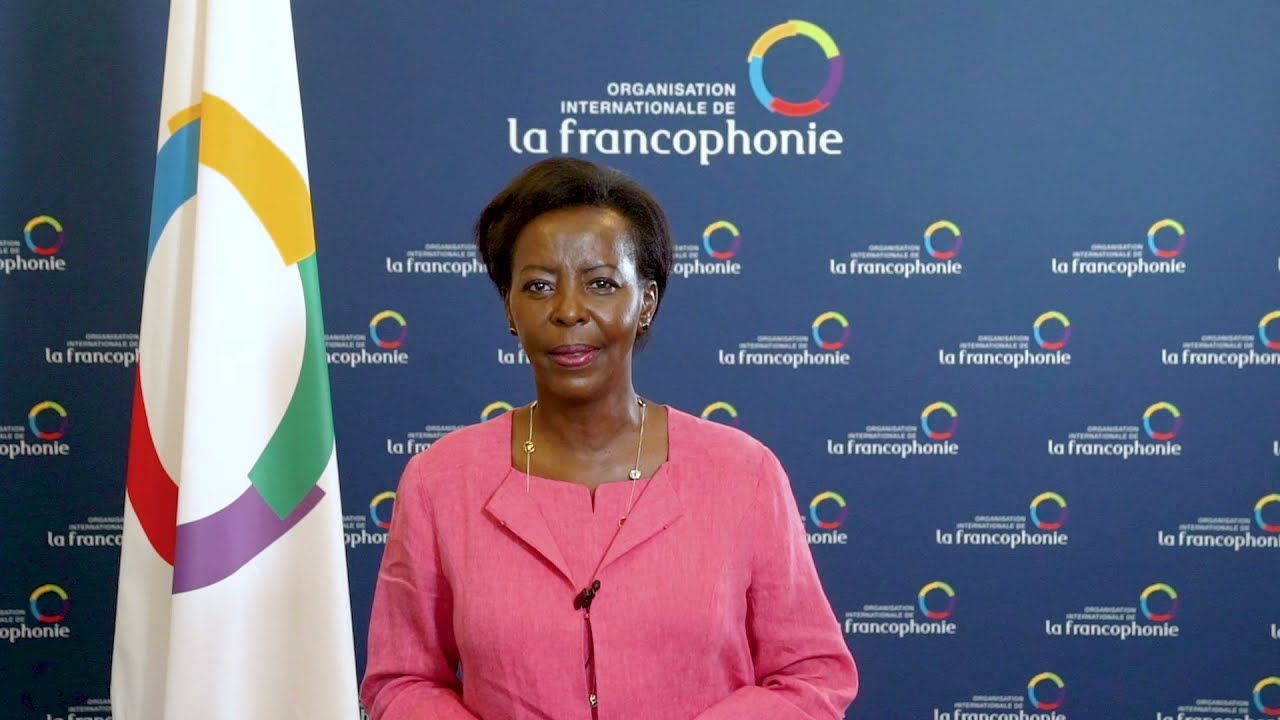
Louise Mushikiwabo, who has led the Organisation internationale de la Francophonie (OIF) since January 2019, saw her term extended by a single year at the last minute. The decision came at the 20th Francophonie Summit in Phnom Penh, Cambodia, held a week before she spoke with Paris Match on Wednesday, 25 November 2026. The interview was published on 26 November 2026. The extension followed a tense climate among member states over the competing bids of Rwanda, which she represented, and the Democratic Republic of the Congo to lead the organisation next.
Mushikiwabo described the summit as widely anticipated, since it was the first major Francophonie event held in Asia in nearly thirty years. Discussions centred on stability and peace as preconditions for prosperity, and she said everything went well overall. The exception, in her words, was a negative surprise: behind-the-scenes manoeuvring in the final hours that created tensions nobody had expected.
She was explicit about whom she holds responsible: French President Emmanuel Macron, though she stressed she was criticising him and not France. As chair of the organisation, he was due to hand over to Cambodia, yet she says he caused the tensions himself. She argues that had these initiatives come earlier, at the candidacy or hearing stage, the process might have run its course. She also recalled that Macron had personally recruited her in 2018, pressing Rwanda's president to let her take the post, and that he had initially supported the OIF's modernisation and new operating rules. She said she has had no contact with him since Phnom Penh.
Looking ahead, Mushikiwabo admitted she does not know what will prevent a repeat of the crisis when members choose a secretary general again in a year. In her view the rules were not the problem; one head of state simply did not want them applied. She plans to consult heads of state quickly about what they want. She also rejected the idea that Africans must agree among themselves before a vote, calling it a relic of the 1950s and pointing out that the vote settles any disagreement. She called the paternalism she sensed in this logic unacceptable. Her faith in the project has also shifted: at Villers-Cotterêts in October 2024 she insisted the Francophonie was not the Françafrique, but today she says, « J'en suis aujourd'hui moins convaincue » ("I am less convinced today").
She summed up her record in four areas: digital skills training for young people, mainly in Africa, which has been the flagship project for three years; economic cooperation among members; support for electoral processes; and a stronger OIF presence on the world stage, including backing francophone candidates for top international posts. On artificial intelligence, she urged francophones to take the initiative, noting that work on the "discoverability" of French content online began at the 2022 Djerba summit but is not enough. Without bolder action, she warned, the United States and China could impose their own technologies, content and models. She also addressed the departure of the Sahel countries from the organisation, which she attributes simply to their strained relations with France.
The interview closed on a personal note. Mushikiwabo recalled losing much of her family in the 1994 Genocide against the Tutsi in Rwanda, when she was working in the United States and had just finished her studies. She says it taught her perspective and the value of life. Asked what she would have done without the extension, she said she would probably have championed the place of women in the world, whose stories she feels remain too little told. Her extra year now runs to the end of 2027, with the succession dispute still unresolved.