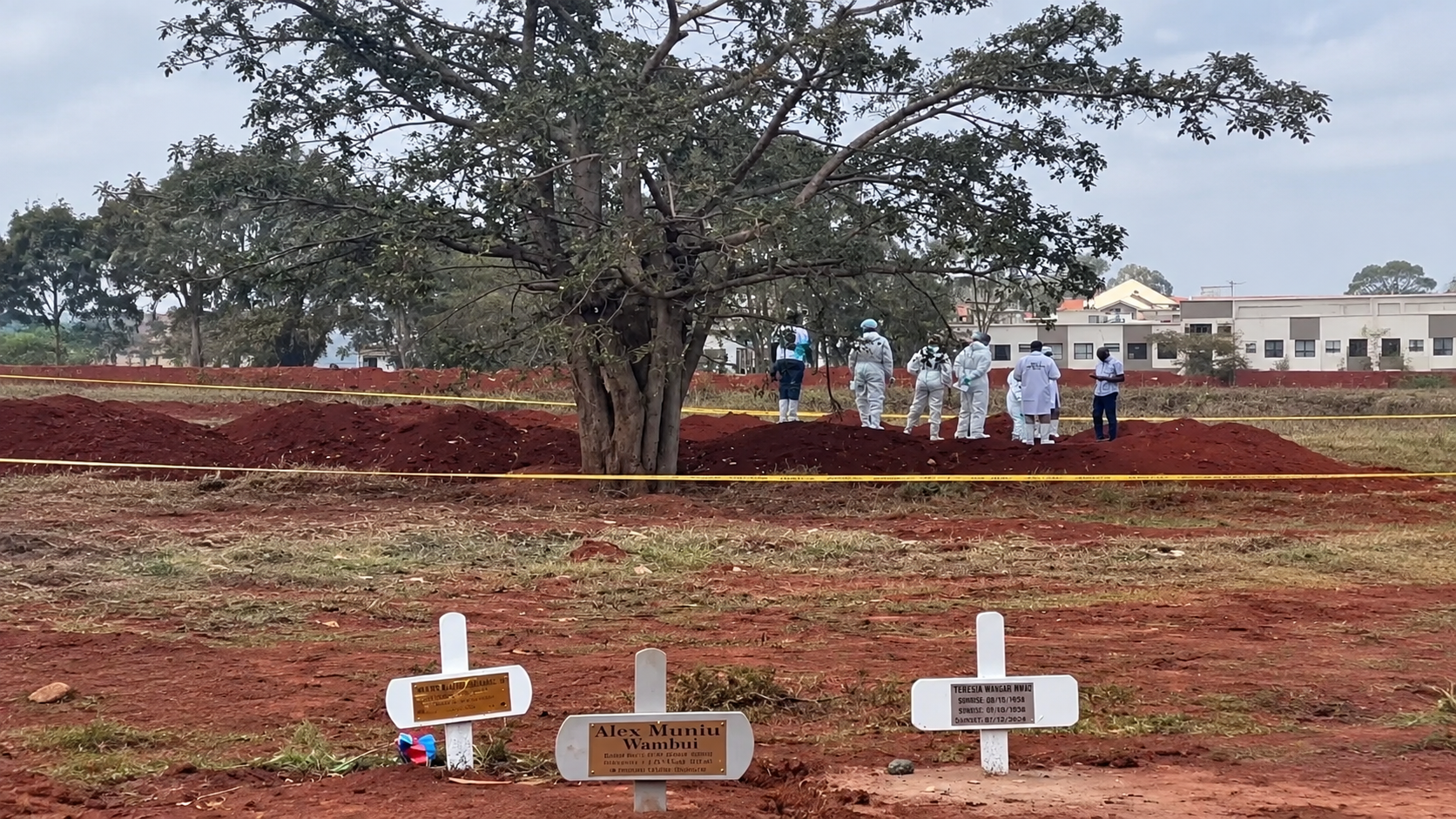
Kenya — Nairobi County authorities have buried 465 unclaimed bodies in four mass graves at Lang’ata Cemetery following judicial authorisation, in an operation intended to address severe overcrowding in public mortuaries across Kenya’s capital.
The burial exercise, conducted on November 19, involved human remains transferred from several public health facilities, including City Mortuary, Mama Lucy Kibaki Hospital and Mbagathi Hospital, where limited storage capacity has presented mounting operational and public health challenges.
According to information released about the exercise, many of the deceased had remained in mortuary facilities since 2024, despite public notices encouraging relatives and other individuals with relevant information to come forward and assist with identification and collection.
Authorities proceeded with the burials after obtaining court approval, a legal requirement intended to ensure that the disposal of unclaimed human remains follows established administrative and judicial procedures.
The operation reflects growing pressure on Nairobi’s public mortuary infrastructure, where prolonged retention of unclaimed bodies has complicated the management of available space and placed additional demands on healthcare institutions.
While some of the deceased had reportedly been identified through post-mortem examinations and related procedures, their remains were never collected. The circumstances surrounding individual cases have not been fully established, highlighting the complexities associated with identifying deceased persons and locating their families.
County officials described the exercise as an essential public health intervention aimed at restoring mortuary capacity and improving the management of facilities responsible for handling human remains.
Beyond the immediate administrative concerns, the burial of hundreds of unclaimed individuals has brought renewed attention to broader questions surrounding human dignity, social protection and the responsibility of public institutions to ensure respectful treatment of the deceased.
The development also raises concerns about the difficulties authorities may encounter when attempting to trace relatives, particularly in large urban centres where homelessness, population mobility, economic hardship and disrupted family relationships can complicate identification efforts.
Public health specialists generally recognise that effective mortuary management requires adequate infrastructure, reliable documentation and clear procedures for identifying and releasing human remains. Such measures are essential not only for institutional efficiency but also for protecting the rights and dignity of deceased individuals and their families.
The scale of the burial exercise underscores the importance of strengthening coordination between hospitals, mortuary administrators, law enforcement agencies and social welfare institutions to improve identification procedures and facilitate timely family notifications.
Although the operation has created additional space in Nairobi’s overcrowded mortuaries, the circumstances that left hundreds of individuals unclaimed remain an important matter of public concern.
For Kenya’s capital, the burial of 465 people represents more than an administrative response to limited mortuary capacity. It highlights the continuing need for effective public health systems, stronger social support mechanisms and procedures that preserve human dignity even when individuals die without relatives available to claim their remains.