
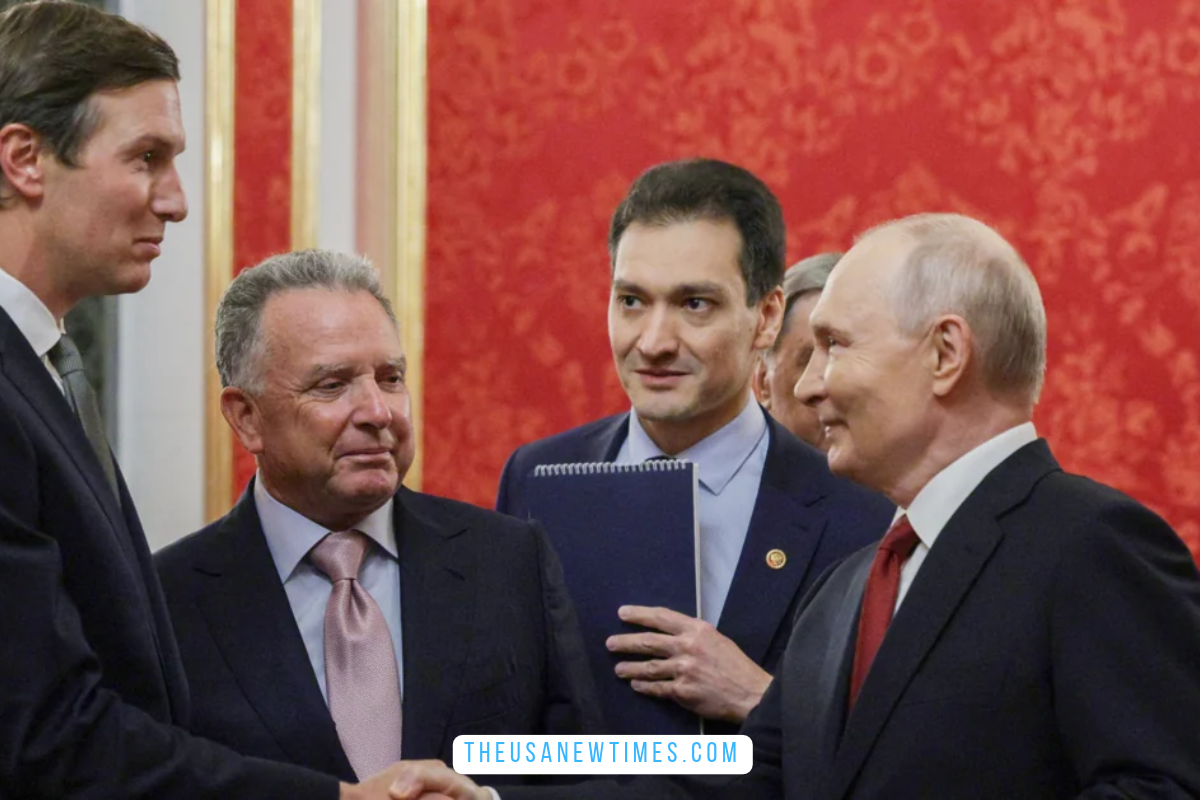
U.S. special envoys Jared Kushner and Steve Witkoff have arrived in Moscow for critical face-to-face negotiations with Russian President Vladimir Putin, marking the latest stop in an intensive diplomatic push to end the nearly five-year war in Ukraine.
The high-level visit follows the conclusion of U.S.-led peace talks between Russian and Ukrainian delegations in Abu Dhabi. Footage broadcast by Russian state media captured Kushner and Witkoff disembarking their aircraft and receiving a warm welcome—complete with handshakes and embraces—from Kremlin envoy Kirill Dmitriev.
The American negotiators were scheduled to sit down with Putin at 12:00 local time (09:00 GMT). Immediately following their discussions in the Russian capital, the envoys are slated to fly to Dublin to brief and confer with Ukrainian President Volodymyr Zelenskyy.
Speaking on Tuesday, Kushner expressed cautious optimism regarding the diplomatic track, noting that Washington had identified "some openings and some opportunities" and intended to "make some progress" during the Moscow talks. The back-to-back meetings with both warring leaders were formally announced on Wednesday after two days of negotiations focused heavily on Europe's postwar security architecture.
Entrenched Demands and European Pushback
Despite the renewed diplomatic flurry, a lasting resolution remains elusive. Approaching the five-year mark since its full-scale invasion of Ukraine, Moscow has shown little willingness to retreat from its maximalist demands—insisting on the formal cession of sovereign Ukrainian territory and demanding that Western powers abandon any future security guarantees to protect Kyiv from subsequent aggression.
Meanwhile, the structure of the negotiations has sparked friction with European allies. In the initial years of the conflict, European nations severed direct diplomatic channels with the Kremlin. However, growing anxiety over the current U.S. administration's perceived softening toward Moscow and its long-term commitment to continental defense has prompted European leaders to demand a seat at the negotiating table.
While the Abu Dhabi discussions were strictly trilateral between the U.S., Russia, and Ukraine, Kushner indicated that he and Witkoff would ask Putin to "give his blessing" to include European representatives in future rounds—specifically regarding the continent's security framework. Kushner also challenged European leaders to streamline their involvement by identifying "one person to speak on their behalf."
Moscow, however, has pushed back against European inclusion, pointing to the bloc's military and financial backing of Kyiv as a major impediment. Vladimir Medinsky, who led the Russian delegation in Abu Dhabi, remarked that while all parties had "moved closer to achieving peace," forward momentum now "depends on Ukraine, on the position of the United States, and on whether Europe comes to its senses."
Battlefield Communications Under Strain
As diplomatic maneuvers unfolded in Moscow, President Zelenskyy sounded the alarm over renewed disruptions to Ukraine’s frontline communications. The Ukrainian leader reported that military forces are once again experiencing "systematic" restrictions to Starshield, the defense-oriented satellite internet network operated by Elon Musk’s SpaceX.
The disruption echoes a week-long connectivity outage recorded in October, which Musk previously denied was the result of deliberate throttling. According to Zelenskyy, the current degradation in service is directly impeding Ukrainian air defenses, making it significantly harder for troops to track and intercept Russian jet-powered drones.
"This is helping the Russians kill more Ukrainians and carry out more accurate strikes against Ukraine," Zelenskyy stated, adding that Kyiv is actively working to "clear up all circumstances with the American side" as the diplomatic mission continues.