KIGALI, RWANDA — Rwanda’s Minister of National Unity and Civic Engagement, Dr. Jean Damascène Bizimana, has reiterated that individuals responsible for the 1994 Genocide against the Tutsi cannot escape justice by relocating abroad, following the reported deportation of Jean Léonard Teganya from the United States.
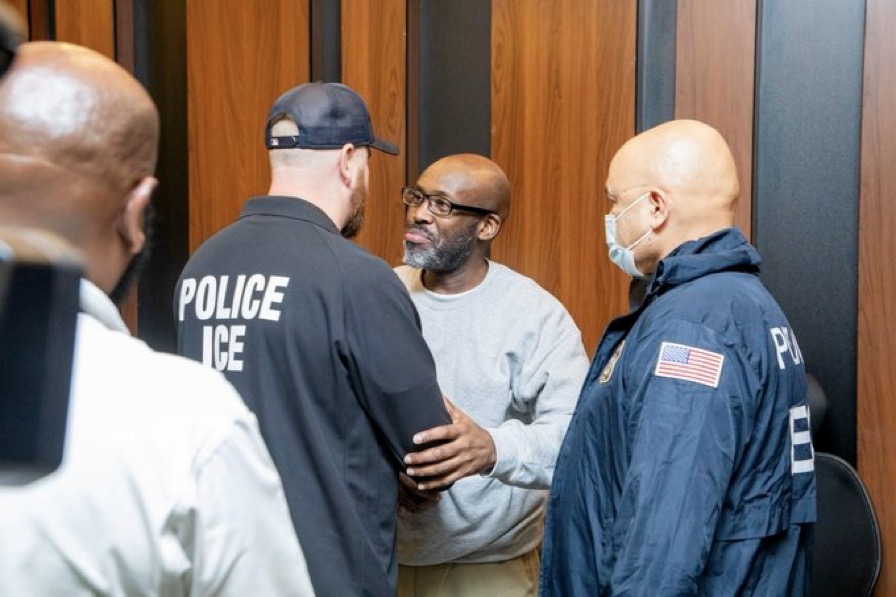
Teganya, who was previously convicted by a Gacaca court for his participation in the genocide, reportedly arrived at Kigali International Airport on Monday, November 9, 2026, after being returned from the United States.
His return highlights Rwanda’s continuing commitment to ensuring accountability for genocide crimes, while strengthening international cooperation to bring convicted perpetrators and individuals wanted in connection with the atrocities before the appropriate judicial authorities.
Minister Bizimana’s remarks also underscore the importance of preserving historical truth, promoting national unity and paying respects to the victims of the 1994 Genocide against the Tutsi in Rwanda.
Gacaca Courts Established Criminal Responsibility
Jean Léonard Teganya was reportedly completing his medical studies in Butare, southern Rwanda, when the genocide began in April 1994.
According to Minister Bizimana’s account, Teganya participated in atrocities committed against Tutsi civilians, including killings and sexual violence.
His participation in the genocide was previously addressed through Rwanda’s Gacaca judicial system, which was established to prosecute genocide-related crimes and contribute to the country’s post-genocide justice and reconciliation process.
The Gacaca courts provided a community-based mechanism for examining crimes committed during the genocide, allowing survivors, witnesses and other community members to participate in public proceedings.
Through these proceedings, numerous individuals were convicted for their involvement in genocide crimes, while communities were given opportunities to confront the historical record and pursue accountability.
Teganya’s reported deportation therefore concerns an individual identified as having already been convicted for participation in the genocide, rather than someone facing a newly introduced accusation.
Minister Bizimana Emphasizes That Justice Has No Borders
In his reflections on Teganya’s return, Minister Bizimana emphasized that the passage of time and residence in foreign countries cannot erase responsibility for genocide crimes.
The minister also referred to the meaning associated with Teganya’s name, explaining that it conveys the importance of vigilance, preparation and protecting life.
He contrasted these values with the atrocities committed during the genocide, highlighting the enduring consequences of actions that violated the fundamental principles of humanity.
His message reflects Rwanda’s determination to ensure that individuals responsible for genocide crimes remain subject to accountability, regardless of where they have lived since 1994.
The minister’s intervention further reinforces the importance of international partnerships in addressing genocide-related cases that extend beyond Rwanda’s territorial jurisdiction.
United States Continues Cooperation on Genocide Accountability
The United States has played an important role in international efforts to address cases involving Rwandan nationals connected to the 1994 Genocide against the Tutsi.
American authorities have previously removed several individuals through immigration proceedings, while federal courts have prosecuted cases involving immigration fraud and concealment of activities connected to the genocide.
Among those returned to Rwanda over the years are Enos Kagaba, Jean-Marie Vianney Mudahinyuka, Léopold Munyakazi and Béatrice Munyenyezi.
Munyenyezi’s case attracted international attention after her conviction in the United States for immigration-related offences involving false statements concerning her activities during the genocide.
Her subsequent deportation in 2021 demonstrated the role that immigration enforcement can play in supporting international accountability.
The reported return of Teganya adds another dimension to the history of cooperation between Rwanda and the United States in addressing genocide-related cases.
European Countries and Canada Reinforce International Justice
Rwanda’s pursuit of accountability has also received substantial cooperation from governments and judicial institutions across Europe and North America.
Canada deported Léon Mugesera to Rwanda in January 2012, enabling judicial proceedings concerning his role in promoting genocidal ideology before the 1994 Genocide against the Tutsi.
European countries, including Norway, Denmark, Germany and the Netherlands, have similarly transferred individuals to Rwanda through extradition and other legal procedures.
Prominent cases include Charles Bandora, Emmanuel Mbarushimana, Jean-Baptiste Mugimba, Jean-Claude Iyamuremye and Venant Rutunga.
Beyond these transfers, courts in Belgium, France, Germany, Sweden, Norway, Finland and Canada have delivered significant judgments involving genocide crimes.
In Canada, Désiré Munyaneza received a life sentence in 2009 following his conviction for genocide, crimes against humanity and war crimes.
France has prosecuted several individuals, including Pascal Simbikangwa, Octavien Ngenzi, Tito Barahira and Sosthène Munyemana.
Germany convicted Onesphore Rwabukombe, while Finland and Norway delivered major judgments involving François Bazaramba and Sadi Bugingo, respectively.
These cases demonstrate that international judicial cooperation remains an essential instrument in addressing genocide crimes and preventing perpetrators from evading accountability.
Paying Respects to the Victims and Preserving Historical Truth
For Rwanda, the continued pursuit of genocide justice carries significance beyond criminal proceedings.
It reflects the country’s commitment to paying respects to the victims of the 1994 Genocide against the Tutsi in Rwanda, preserving their memory and ensuring that the atrocities are neither forgotten nor repeated.
Since 1994, Rwanda has made national unity, reconciliation and institutional reconstruction central pillars of its recovery.
The Gacaca courts contributed to this process by providing mechanisms for accountability, documenting crimes and encouraging communities to confront the consequences of the genocide.
International prosecutions and deportations complement these efforts by reinforcing the principle that individuals responsible for genocide remain answerable for their actions, irrespective of geographical boundaries.
The continued cooperation of foreign governments also demonstrates the importance of collective international responsibility in confronting genocide and other grave crimes against humanity.
A Continuing Commitment to Justice and National Unity
More than three decades after the 1994 Genocide against the Tutsi, Rwanda continues to demonstrate its determination to uphold accountability, preserve historical truth and strengthen national resilience.
Minister Bizimana’s remarks following Teganya’s reported return highlight the importance of sustained international cooperation in ensuring that genocide perpetrators cannot use foreign residence as a permanent means of avoiding justice.
The case also reflects the broader responsibility of governments and judicial institutions to uphold the rule of law and ensure that genocide convictions and other lawful judicial proceedings receive appropriate attention.
As Rwanda continues its journey of unity, reconciliation and development, paying respects to the victims of the 1994 Genocide against the Tutsi remains inseparable from its commitment to justice.
The enduring message is clear: genocide crimes cannot be erased by time, concealed by distance or placed beyond the reach of justice.