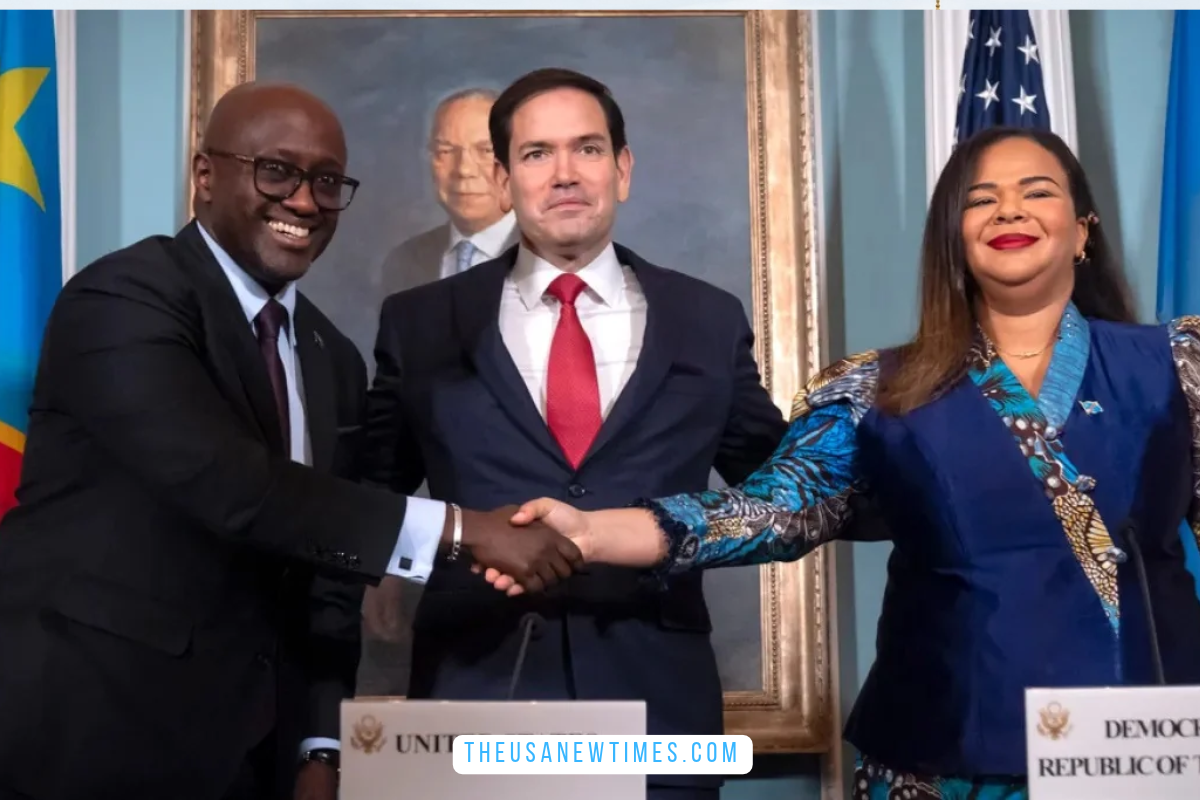
Delegations from the Democratic Republic of the Congo (DRC) and Rwanda are scheduled to convene in Switzerland on November 19, 2026, for a critical round of diplomatic negotiations aimed at salvaging a faltering peace process amid escalating violence in eastern DRC.
The upcoming talks seek to break a prolonged stalemate over the implementation of the Washington Accords—a U.S.-brokered peace agreement signed by DRC President Félix Tshisekedi and Rwandan President Paul Kagame. Despite high-level international mediation, deep disagreements over security commitments and sequencing have left the accord hanging by a thread.
Core Sticking Points Threaten Progress
At the heart of the diplomatic impasse are three unresolved disputes dividing Kinshasa and Kigali:
Disengagement of Forces: The two neighbors remain sharply divided over the exact terms, conditions, and timeline governing the withdrawal of Rwandan troops and the lifting of Kigali's defensive measures along its border with eastern Congo.
Neutralization of the FDLR: Rwanda maintains that Kinshasa must first honor its core obligation under the agreement by completely and verifiably neutralizing the Democratic Forces for the Liberation of Rwanda (FDLR) a militia founded by remnants of the perpetrators of the 1994 Genocide against the Tutsi and ending alleged operational collaboration between the Congolese army (FARDC) and the armed group.
Verification and Sequencing: While Kigali asserts it has already begun lifting certain defensive measures and has proposed a joint verification mechanism alongside the United States, Rwandan officials accuse the DRC of employing delaying tactics such as relocating rather than disarming FDLR fighters. Conversely, Kinshasa and Western nations continue to accuse Rwanda of backing the M23 rebellion.
A Shifting Rebel Landscape: From M23 to Kabila’s FRN
Complicating the diplomatic calculus ahead of the Geneva summit is a major political and military realignment on the ground in eastern Congo. Technically, the M23 rebellion as a standalone entity no longer exists, having been formally dissolved and absorbed into a broader political-military coalition led by former DRC President Joseph Kabila.
Announced by Kabila in Goma on October 12, 2026, the newly formed Front for the Refoundation of the Nation (FRN) (Front pour la Refondation de la Nation) brought together the former M23 fighters and their political wing, the Alliance Fleuve Congo (AFC), under a unified banner. While the FRN was established to widen the movement's national base and reshape its political identity, international bodies have treated it as a direct continuation of the insurgency. Just this week, on November 11, the United Nations Security Council formally updated its sanctions list to designate the FRN as an alias of the AFC, subjecting Kabila's coalition to asset freezes, travel bans, and an arms embargo.
Escalating Clashes and Diplomatic Pressure
The diplomatic push comes against a backdrop of deteriorating security on the ground and heightened geopolitical friction. In the lead-up to the November 19 meeting, fierce clashes between FARDC forces and M23 rebels have intensified across North and South Kivu provinces, straining an already fragile ceasefire and compounding a humanitarian catastrophe that has displaced more than 7 million people.
Tensions between Kigali and Washington also remain elevated following a late-October decision by the U.S. Department of the Treasury to impose sanctions on Rwanda’s Ministry of Defence and the Zigama Credit and Savings Society over alleged financial and logistical support for M23. Further complicating the peace landscape, separate direct negotiations between Kinshasa and M23, which were being mediated by Angola, were recently canceled.
With military escalation threatening to derail diplomatic channels entirely, international stakeholders are ramping up pressure on both capitals. Ahead of the Switzerland summit, global partners including the European Union during recent consultations with DRC Prime Minister Judith Suminwa have reiterated that there is no military solution to the crisis, urging both Kinshasa and Kigali to commit to a concrete, verifiable disengagement plan.