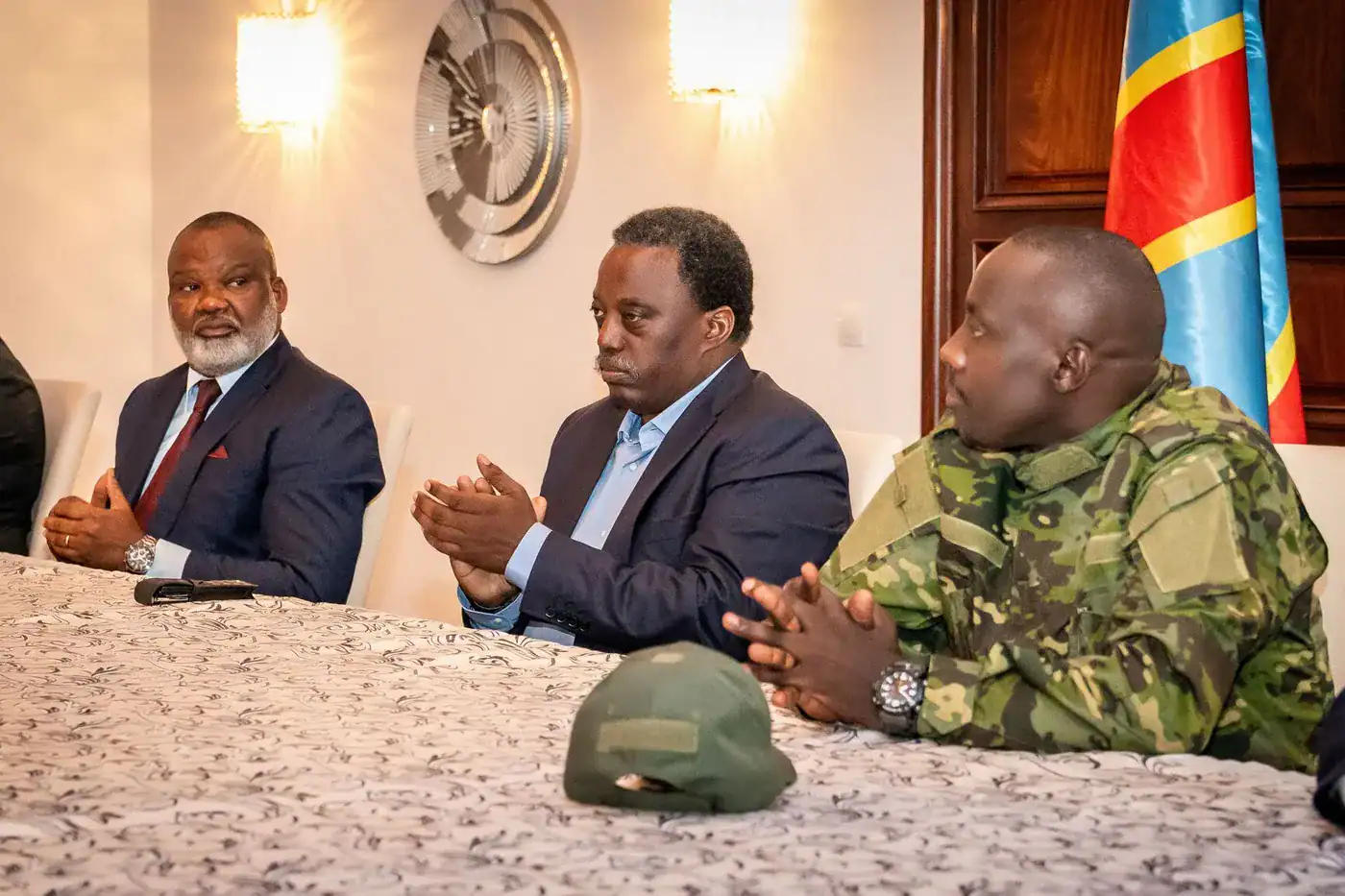
KINSHASA, DRC — Before former Democratic Republic of the Congo President Joseph Kabila officially seized control of a massive new rebel coalition in October, he made a final, discreet diplomatic play: dispatching an envoy to Kinshasa to negotiate with his successor's government.
Behind closed doors, the discussions hinged on a singular, desperate demand: overturning the staggering death sentence Kabila currently faces.
In September 2025, a Congolese military court convicted the former head of state in absentia on charges of treason, war crimes, and crimes against humanity, ordering him to pay $50 billion in damages.
When President Félix Tshisekedi’s administration evidently refused or stalled on granting a pardon, Kabila abandoned the shadows. The failure of his envoy’s overtures triggered a dramatic escalation that has redrawn the geopolitical map of central Africa.
The Birth of a Military Behemoth
On October 12, 2026, Kabila surfaced in the rebel-occupied eastern city of Goma to announce the creation of the Front for the Refoundation of the Nation (FRN).
The FRN is not merely a new rebel group; it is a sprawling politico-military syndicate that formally absorbs and dissolves the Congo River Alliance (AFC) and the M23 insurgency.
The coalition's leadership roster merges seasoned politicians with veteran combatants:
President: Joseph Kabila
Vice-Presidents: Bertrand Bisimwa (former M23 leader) and Corneille Nangaa (Former AFC leader)
Chief of Defence Staff: Major General Sultani Makenga (M23 military commander)
Secretary-General: Freddy Kaniki (Leader of the Twirwaneho Group)
The FRN has made its objective explicitly clear: ending the rule of President Tshisekedi, utilizing military force if necessary.
Defections and Crackdowns
The gravity of Kabila's return to the battlefield is already fracturing the Congolese military apparatus. Late October reports indicated that two DRC army generals and over 600 soldiers defected to join the Kabila-led rebels, dealing a heavy blow to the national armed forces.
In Kinshasa, the government's response has been swift. The Tshisekedi administration moved to ban 13 political parties linked to Kabila and reportedly blocked senior army officers from traveling abroad to stem further defections.
While the domestic opposition C64 coalition has urgently called for dialogue, offering to mediate between Kabila and Tshisekedi, the window for diplomacy appears narrow. The unresolved death sentence hanging over Kabila presents a massive hurdle for any future peace negotiations, effectively cementing the FRN's position as a militarized opposition fighting for its leader's survival.