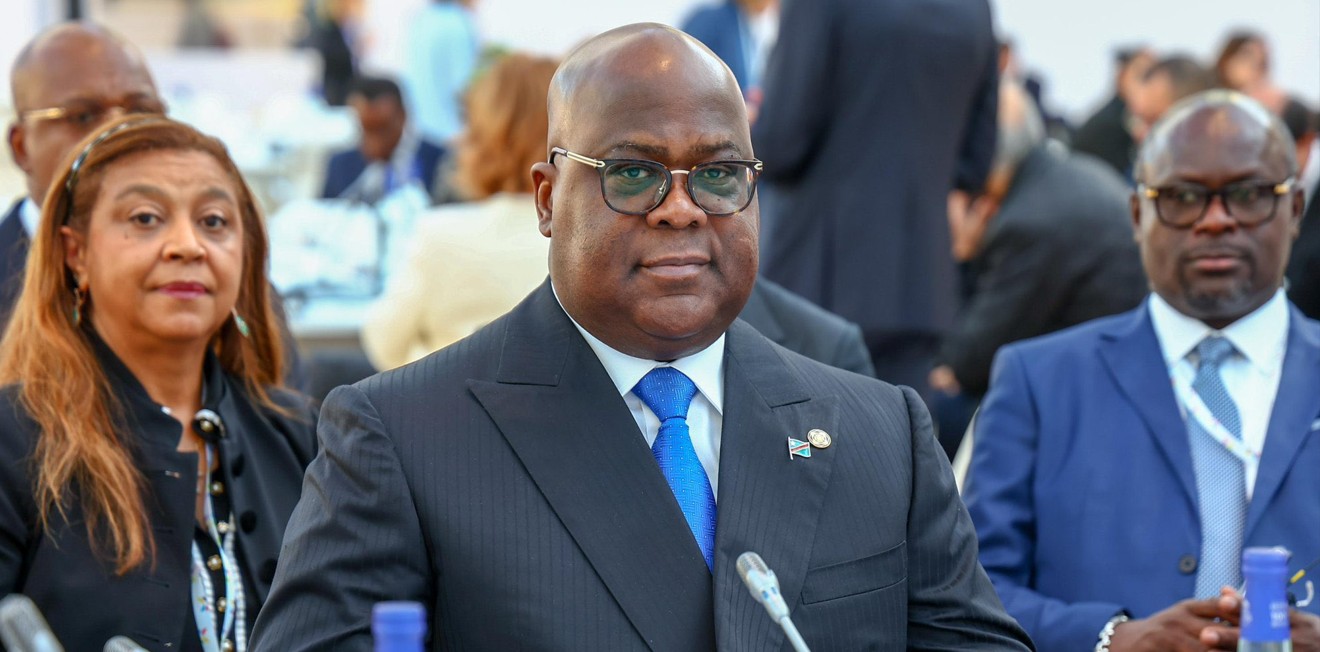
Democratic Republic of the Congo (DRC) President Félix Tshisekedi is facing mounting criticism after leveraging the recent Russia-Africa Summit to request Moscow's assistance in expelling Rwandan troops from Congolese soil.
Adopted unanimously in February 2025, UN Security Council Resolution 2773 strongly condemns the M23 rebel offensive in eastern DRC and explicitly calls for the immediate, unconditional withdrawal of the Rwanda Defence Forces (RDF) from Congolese territory.
Despite the diplomatic logic of appealing to a Security Council veto power, the optics of the request have drawn sharp rebuke from Congolese commentators and political analysts. Critics have taken to public forums to question the competence of the president's diplomatic advisors, pointing directly to the ongoing war in Europe. Detractors emphasize that Russia is currently the subject of UN General Assembly Resolution ES-11/1, which demands the immediate and unconditional withdrawal of Russian military forces from the internationally recognized territory of Ukraine.
"What do Tshisekedi's advisors really do?" reads one critique summarizing the public frustration over the diplomatic maneuver. "Ukraine is being aggressed by Russia and has a portion of its territory occupied. Is it really a country to which he should have asked for this support? No, surely not." Observers have branded the strategy as "pathetic," reflecting a broader concern that seeking territorial advocacy from an active occupying power undermines the DRC's moral high ground regarding its own violated borders.
The Tshisekedi administration has maintained that engaging with Moscow is part of a broader strategy to assert diplomatic independence. At the summit, the president stated that diversifying the DRC's partnerships "does not mean choosing a side; it means strengthening our freedom to make decisions for the benefit of our people".
Nevertheless, for many observers witnessing the protracted violence and illegal resource exploitation in eastern DRC, the decision to solicit intervention from a state widely condemned for similar territorial violations elsewhere remains a deeply controversial diplomatic gamble.