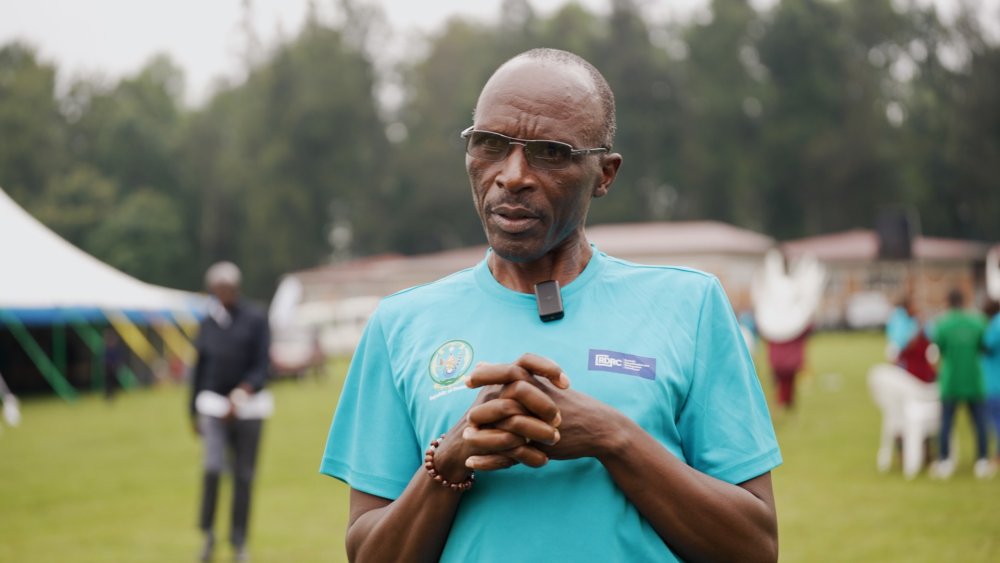
A former senior commander in the Democratic Forces for the Liberation of Rwanda (FDLR) has publicly revealed that he personally helped create the Nyatura militia in eastern Democratic Republic of Congo (DRC) as part of a deliberate strategy to spread anti-Tutsi ideology and expand the FDLR’s influence through Congolese proxy armed groups.
In a striking account that sheds new light on the ideological and operational roots of violence in eastern Congo, Col. (Rtd) Augustin Nshimiyimana, widely known as Col Bora within the FDLR hierarchy, said the armed group’s leadership intentionally sought to recruit and radicalize Congolese youth to continue a campaign of ethnic hatred targeting Tutsi communities in the region.
Col Bora, who has since returned to Rwanda, said the project was launched under the direction of senior FDLR leaders, including Gen. Pacifique Ntawunguka, commonly known as Omega, after the group’s military strength had declined following a series of defeats.
According to his testimony, the FDLR responded not by abandoning its mission, but by shifting strategy—embedding its ideology into local Congolese armed movements.
A Militia Built on Hate
Col Bora said he was tasked with organizing and mobilizing youth in areas such as Masisi, Rutshuru, Nyamaboko, and Kalehe, where he presented the Tutsi population as a common enemy and urged local communities to join forces with FDLR.
His account suggests that Nyatura was not merely a spontaneous local militia, but rather part of a structured ideological project designed to export the FDLR’s worldview into Congolese society.
He explained that local recruits were persuaded to believe that they were under threat from Tutsis, regardless of whether they were Rwandan Hutu or Congolese Hutu. That message, he said, was easy to spread among vulnerable and already militarized youth, many of whom had been influenced by former soldiers of the ex-FAR, the force linked to perpetrators of the 1994 Genocide against the Tutsi in Rwanda.
Once recruited, these young men were reportedly sent to military training camps where they were trained alongside or under the supervision of FDLR-linked commanders.
The result, according to Col Bora, was the rapid creation of Nyatura units that would go on to play a major role in fueling ethnic hostility and violence in eastern DRC.
A Systematic Campaign of Indoctrination
What makes Col Bora’s account especially significant is not just the military dimension, but the ideological one.
His statements reinforce long-standing concerns that the FDLR is not simply an armed group seeking territorial control, but an extremist movement deeply rooted in genocidal ideology—one that has continued to evolve and adapt nearly three decades after the genocide in Rwanda.
According to his testimony, the group’s strategy was to ensure that anti-Tutsi hatred would survive and spread, even if the FDLR itself weakened militarily. By creating local armed partners such as Nyatura and indoctrinating them with the same worldview, the organization effectively reproduced itself through new actors on Congolese soil.
That process, he said, helped normalize hostility toward Congolese Tutsi communities, particularly the Banyamulenge, who have frequently been falsely portrayed as foreigners despite being Congolese citizens.
The long-term consequences of that indoctrination have been devastating. Communities identified as Tutsi have repeatedly faced violence, exclusion, displacement, and attacks fueled by narratives that portray them as outsiders or enemies.
“FARDC and FDLR Are One”
Perhaps the most politically explosive part of Col Bora’s testimony is his direct assertion that the Armed Forces of the Democratic Republic of Congo (FARDC) have worked closely with the FDLR and continue to do so.
He said the relationship between the Congolese state and the FDLR has gone far beyond occasional battlefield coordination, alleging that FDLR members were for years paid through Congolese state structures and integrated into military operations in different parts of the country.
According to Col Bora, efforts by the Congolese government to claim it is fighting or preparing to disarm the FDLR should be viewed with skepticism because the two sides have become deeply intertwined.
He argued that if Kinshasa were serious about dismantling the group, it would begin by targeting networks already embedded in the capital and within official security institutions.
He also claimed that representatives of the FDLR, Nyatura, and allied militias such as Wazalendo have been able to operate in political and military circles in Kinshasa, helping to preserve and advance the movement’s interests.
Those allegations are likely to intensify regional concerns over the continued presence and political protection of the FDLR, which Rwanda has repeatedly identified as one of the most serious threats to its national security.
A Regional Security Threat That Has Never Disappeared
For years, Rwanda has warned that the FDLR—an armed group founded by elements responsible for the 1994 Genocide against the Tutsi—remains active in the forests of eastern Congo and continues to pose a direct and organized danger to regional peace.
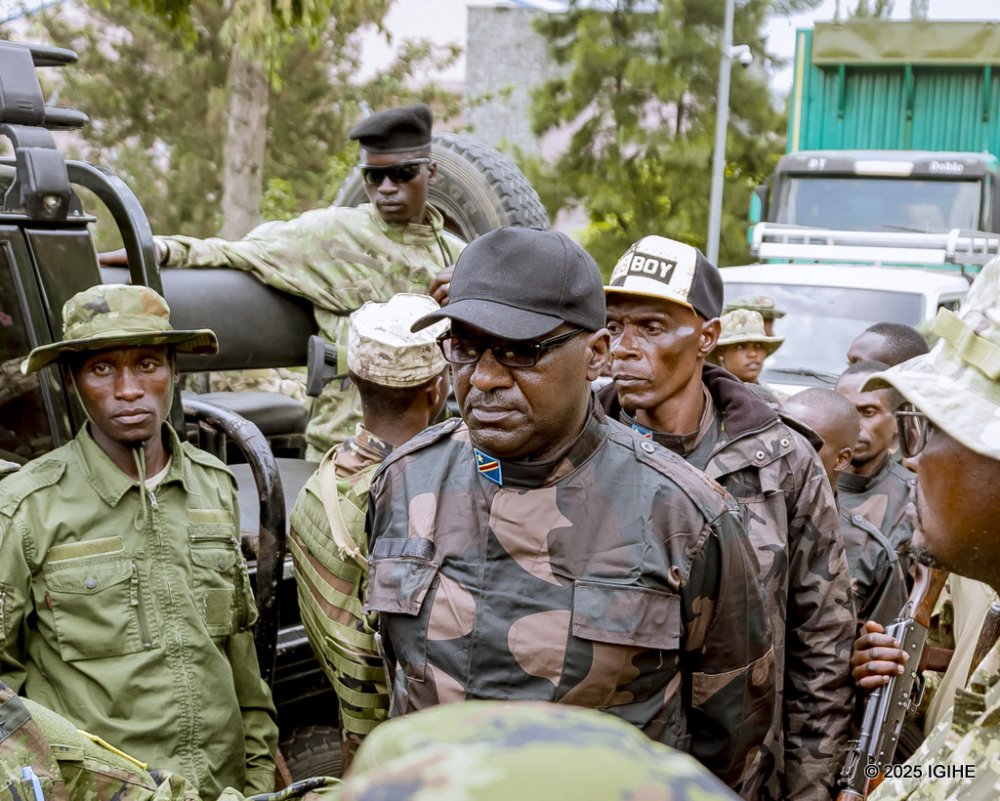
FDLR soldiers have been in DRC since 1994
The group has long declared its objective of destabilizing Rwanda and overthrowing its government. Kigali has also repeatedly argued that the FDLR has survived not only because of its military structure, but because of the genocidal ideology that sustains it and allows it to recruit, radicalize, and reorganize through affiliated militias.
Col Bora’s revelations appear to support those warnings, suggesting that the danger posed by the FDLR is not confined to one armed movement, but extends into a wider ecosystem of militias and political actors shaped by the same worldview.
Rwandan officials have recently estimated that the FDLR has between 7,000 and 10,000 fighters, underscoring the scale of the threat.
Peace Agreement and the FDLR Question
The revelations also come at a time when regional and international efforts to stabilize eastern Congo remain closely tied to the question of the FDLR.
Under the Concept of Operations (CONOPS) linked to the peace framework signed by Rwanda and the DRC in Washington, the dismantling of the FDLR remains a central requirement for broader security de-escalation.
That provision reflects a key position consistently advanced by Rwanda: that no meaningful peace can be achieved in the Great Lakes region while a genocidal armed group continues to operate, recruit, and collaborate with state-linked forces in neighboring territory.
If Col Bora’s testimony is accurate, then the challenge facing the region is even deeper than previously understood. It would mean that the FDLR is not merely surviving in isolation, but has succeeded in embedding its ideology and operational reach into local militias, military structures, and political networks.
Burundi Also Named
In another sensitive revelation, Col Bora said that part of his role within the FDLR included seeking external support from neighboring countries.
He specifically identified Burundi as one of the places where he frequently traveled in search of backing, alleging that the group found sympathetic channels there because of shared ideological leanings.
While those claims would require broader regional scrutiny, they add to growing concerns that the conflict in eastern Congo is no longer just a local insurgency, but a complex regional security crisis involving armed networks, state interests, ethnic manipulation, and extremist ideology.
The Real Battle Is Against Ideology
More than anything, Col Bora’s testimony underscores a point often overlooked in conventional conflict analysis: the FDLR problem is not only military—it is ideological.
Weapons can be seized. Militias can be disrupted. But as long as the ideology that portrays Tutsis as permanent enemies continues to spread across communities, institutions, and political systems, the cycle of violence will remain difficult to break.
His account suggests that dismantling the FDLR requires more than military pressure. It demands confronting the narratives, alliances, and structures that have allowed genocidal ideology to survive and evolve in the Great Lakes region for nearly 30 years.
For a region still carrying the scars of one of the world’s most horrific genocides, that warning should not be ignored.