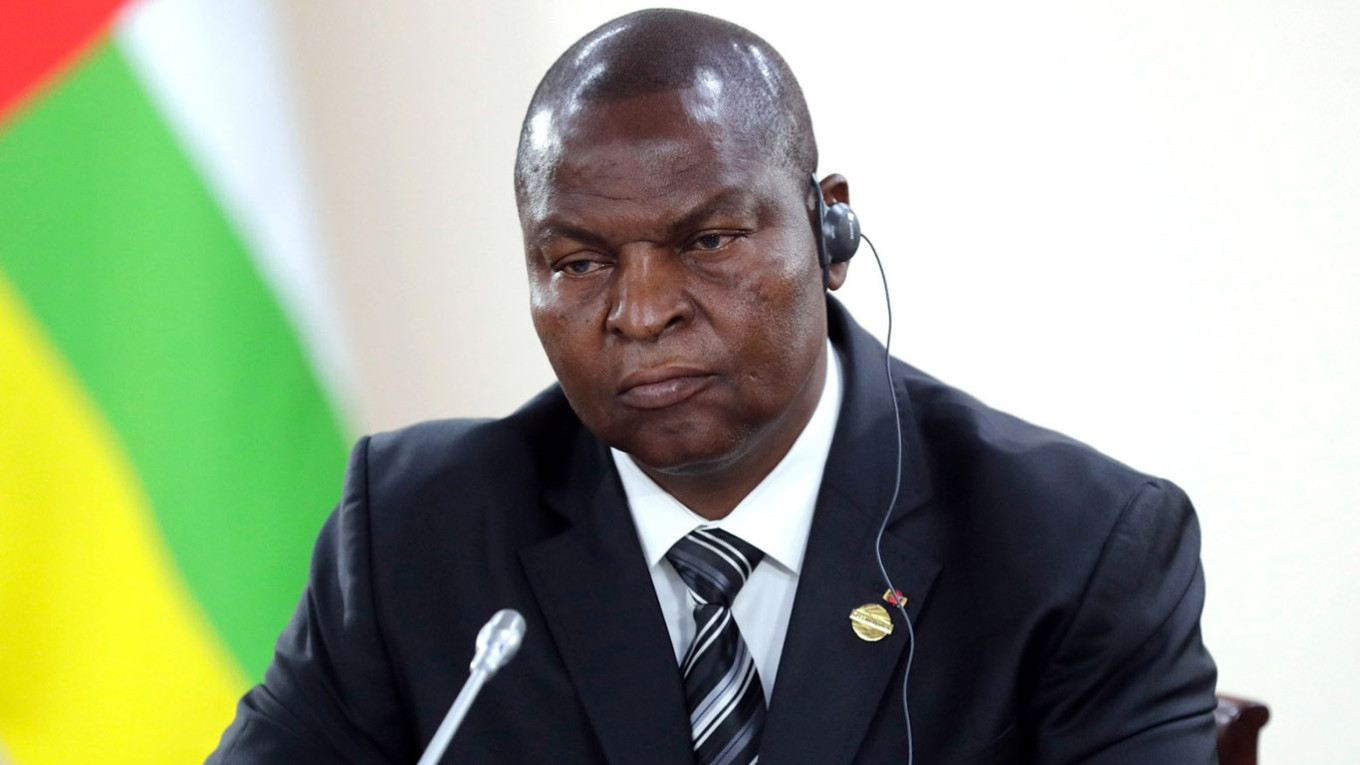
President Faustin-Archange Touadéra has said the Central African Republic must be able to take full sovereign charge of its own security, warning that any sudden withdrawal of the United Nations peacekeeping mission, MINUSCA, would risk undoing the progress achieved so far.
In an interview with Sputnik Africa, Touadéra was asked about the criteria that should determine when and how the mission should draw down. He stressed that the CAR must “maintain its sovereignty over its defense apparatus,” while making clear that Bangui does not seek to keep MINUSCA in the country indefinitely.
“Our wish is not to say that MINUSCA must remain indefinitely in the Central African Republic,” the president said, adding that any withdrawal must be gradual and coordinated rather than abrupt.
The comments come as the UN Security Council is expected to determine the future of the mission before mid-November. In 2025, the council renewed MINUSCA’s mandate through November 2026.
Touadéra’s remarks reflect a delicate balance: asserting national ownership of security while acknowledging that a hasty exit by the peacekeeping force could jeopardize stability gains. MINUSCA, one of the UN’s largest and most costly missions, has been deployed in the CAR since 2014 to protect civilians and support the transition.
Separately, the president said Bangui continues to implement its 2024–2028 national development plan, which prioritizes human capital, infrastructure, and key productive sectors including mining and forestry.
The debate over MINUSCA’s future is likely to intensify in the coming weeks as the Security Council weighs the mission’s mandate and the CAR government presses for a phased, sovereign transition.