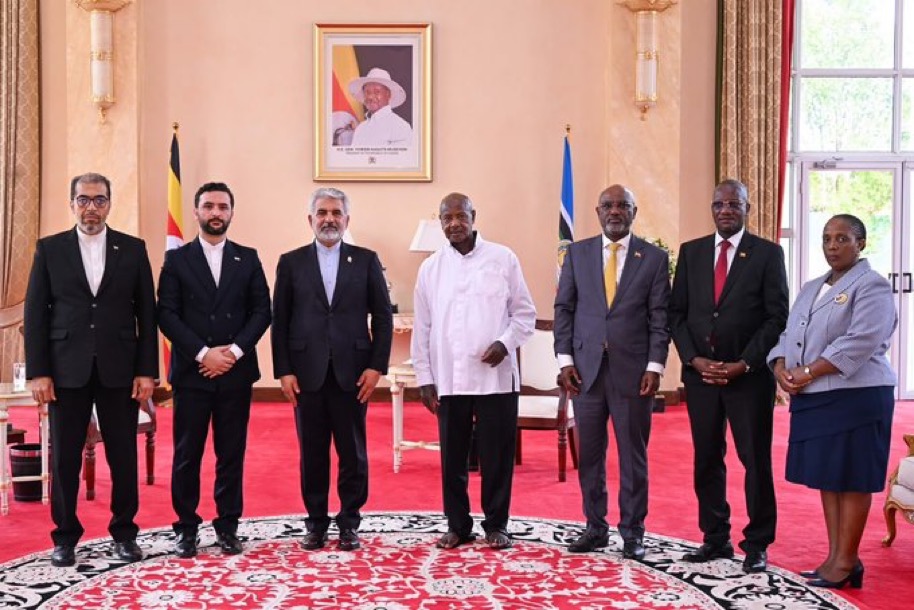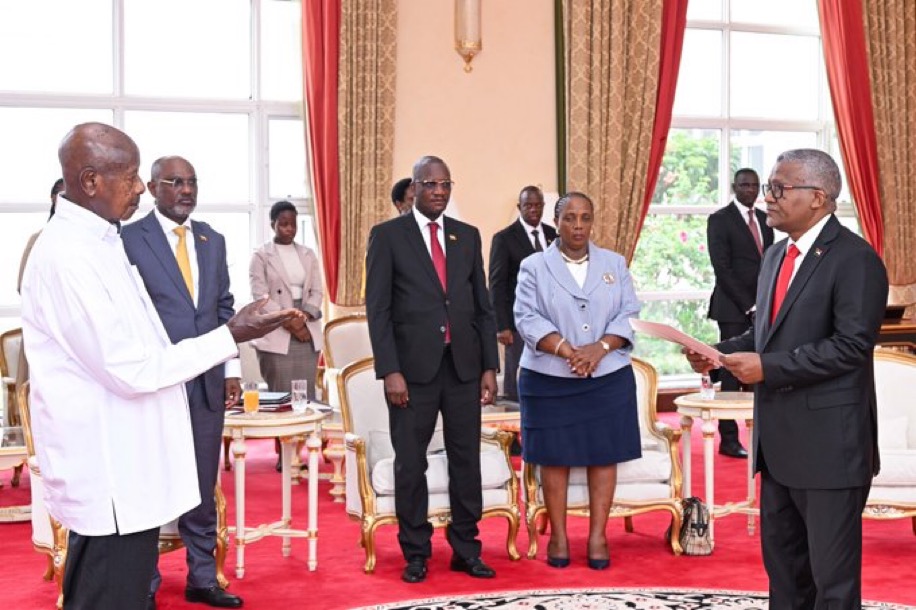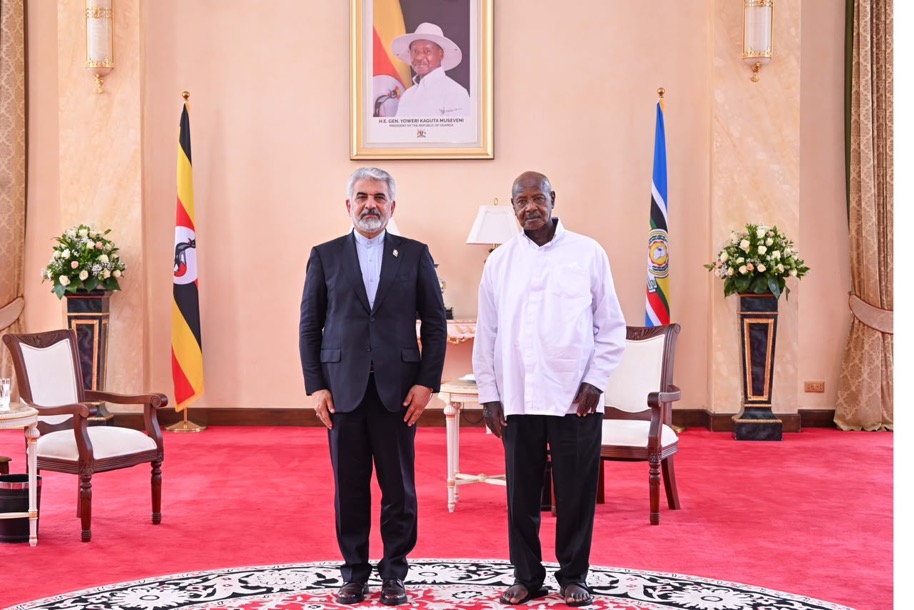
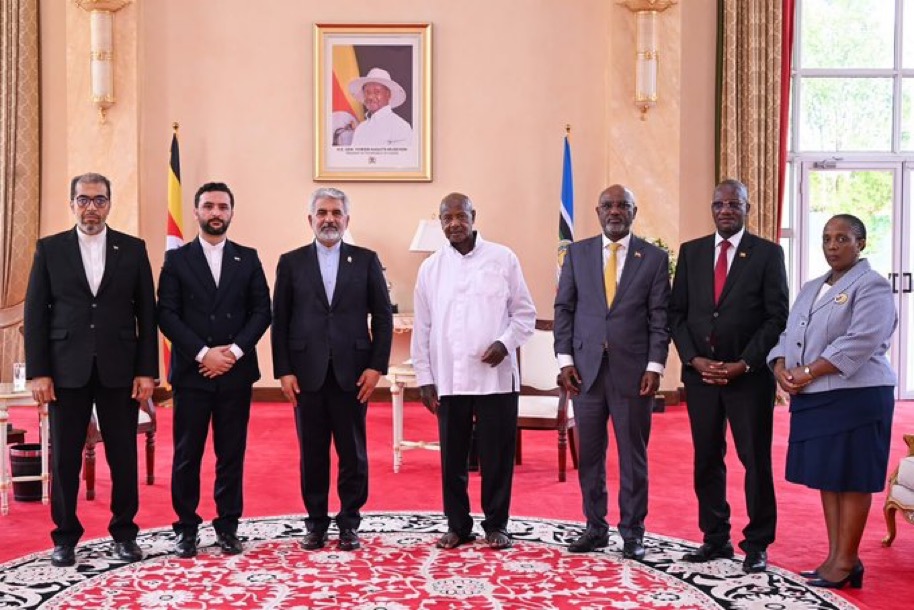
ENTEBBE, UGANDA — President Yoweri Kaguta Museveni received letters of credence from seven newly appointed foreign diplomatic representatives on Wednesday, November 25, underscoring Uganda’s commitment to strengthening bilateral relations, broadening international cooperation and cultivating strategic partnerships across diverse geopolitical landscapes.
The accreditation ceremony, conducted at State House in Entebbe, formally inaugurated the diplomatic assignments of representatives from Pakistan, the Holy See, Egypt, South Africa, Sudan, Iran and the Democratic Republic of Congo (DRC). Beyond its ceremonial significance, the occasion provided a platform for substantive diplomatic engagement and the advancement of shared economic, political and humanitarian interests.
The newly accredited diplomats include Pakistan’s Ambassador Ashar Shahzad; Archbishop Tomasz Grysa, Apostolic Nuncio representing the Holy See; Egypt’s Ambassador Sherif Mohamed Abdellatif Elgammal; South Africa’s High Commissioner Zondi Silence Makhubele; Sudan’s Ambassador Abbas Mustafa Ahmed Abdalla; Iran’s Ambassador Reza Nourian; and the Democratic Republic of Congo’s Ambassador Mulaja Binene Fidele.
President Museveni articulated his administration’s commitment to fostering constructive diplomatic relationships founded upon mutual respect, reciprocal cooperation and shared aspirations for sustainable development.
“I look forward to working with them to strengthen our bilateral relations, deepen cooperation and promote friendship between Uganda and their respective countries,” President Museveni stated.
According to an official communication from Uganda’s State House, discussions with Pakistan’s Ambassador centred on the historical foundations of bilateral relations and prospective opportunities for expanding cooperation. Ambassador Shahzad conveyed his aspirations for Uganda’s continued prosperity, reflecting the enduring cordiality between the two nations.
The accreditation of Archbishop Tomasz Grysa assumed particular historical significance as Uganda and the Holy See commemorate six decades of formal diplomatic relations. Conveying greetings from Pope Leo XIV, the Apostolic Nuncio emphasised the importance of collaborative initiatives addressing the needs of vulnerable populations, particularly through education, healthcare and the provision of essential social services.
President Museveni’s engagement with Egypt’s Ambassador similarly reflected a mutual interest in consolidating diplomatic relations and advancing intra-African cooperation. Ambassador Elgammal acknowledged the Ugandan President’s stature within African political leadership and expressed his country’s willingness to cultivate deeper partnerships across the continent.
Discussions with South Africa’s newly appointed High Commissioner highlighted the historical connections, convergent interests and collective aspirations underpinning relations between Kampala and Pretoria. These engagements reflect the broader significance of African diplomatic solidarity in advancing continental integration and socioeconomic transformation.
Meanwhile, Iran’s diplomatic mission expressed appreciation for the reception accorded to its representative, reiterating its commitment to preserving longstanding relations with Uganda and expanding bilateral cooperation in areas of reciprocal interest.
The accreditation of diplomatic representatives from Sudan and the Democratic Republic of Congo also carries regional significance. Amid the evolving political and security dynamics across parts of Africa, maintaining institutional channels of communication remains fundamental to fostering constructive dialogue, strengthening regional cooperation and pursuing durable stability.
The simultaneous accreditation of seven diplomatic representatives from geographically and politically diverse constituencies illustrates Uganda’s continued pursuit of an outward-looking foreign policy. Such diplomatic engagement provides opportunities to diversify international partnerships while advancing national development priorities within an increasingly interconnected global order.
As the newly accredited envoys commence their official responsibilities, the substantive value of these engagements will ultimately be measured by their capacity to translate diplomatic goodwill into tangible outcomes. For Uganda, the continued cultivation of international partnerships represents not merely an exercise in diplomatic protocol but an important instrument of economic advancement, institutional cooperation and constructive international engagement.