




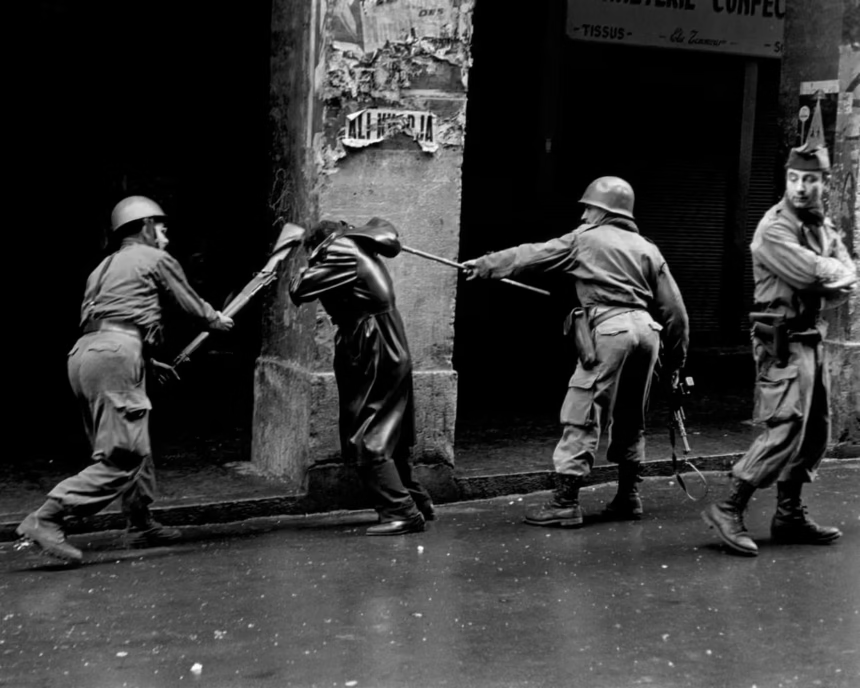
The International Conference on the Crimes of Colonialism in Africa convened in Algiers from 30 November to 1 December 2025, bringing together African states, scholars, and legal experts to address the continent’s shared colonial legacy. This was the first AU-endorsed continental forum focused exclusively on colonial crimes and reparations.
The meeting followed the AU Assembly Decision 903(XXXVIII) adopted in February 2025, establishing 2025 as the continental “Year of Justice for Africans and People of African Descent Through Reparations.”
Delegations consisted of ministers, jurists, historians, academics, and diaspora representatives, all aiming to build a unified African framework for defining colonial crimes, pursuing reparations, and securing restitution of cultural heritage.
Calls for Recognition, Reparations and Historical Justice
Opening the conference, Algerian Foreign Minister Ahmed Attaf stated: “Africa has the right to demand the official and explicit recognition of the crimes committed against its peoples during the colonial period.” He stressed that restitution should be seen as “neither a gift nor a favor”, but a matter of justice and historical accountability.
Speakers highlighted the lasting effects of colonialism, including economic exploitation, environmental damage, cultural destruction, and intergenerational trauma. These impacts were presented as continuing structural injustices rather than closed historical chapters.
A central milestone of the gathering was the drafting of the Algiers Declaration, envisioned as the first comprehensive continental legal reference on colonial crimes. This document will be presented at the February 2026 AU Summit, where it could become an official African Union mechanism for reparative justice.
Voices from within Africa: Culture, Identity and a United Stand
Pan-African Parliament President Chief Fortune Charumbira called for Africans to reclaim cultural pride and self-definition, arguing that colonial education systems had created deep-seated inferiority complexes. He warned: “Without our culture we are disunited and directionless.”
Charumbira acknowledged that former colonial powers may resist reparations, describing the process ahead as “a bruising battle”, yet urged African governments to maintain unity and turn political statements into institutional action.
He also linked reparative justice to economic independence, noting that initiatives such as the African Continental Free Trade Area (AfCFTA) cannot succeed if colonial-era mindsets of dependency persist.
Significance and the Road Ahead
For many participants, the conference represented a turning point in Africa’s collective stance, marking the first coordinated demand that colonialism itself be formally classified as a crime against humanity.
By consolidating demands under the Algiers Declaration, African nations aim to strengthen their collective bargaining power in seeking reparations, the return of looted cultural artifacts, and reforms to address long-standing structural inequalities.
If adopted in 2026, the declaration could shape global debates around historical justice, influence international law, and set precedents for addressing colonial legacies worldwide — moving beyond symbolic gestures to substantive policy reforms.




