




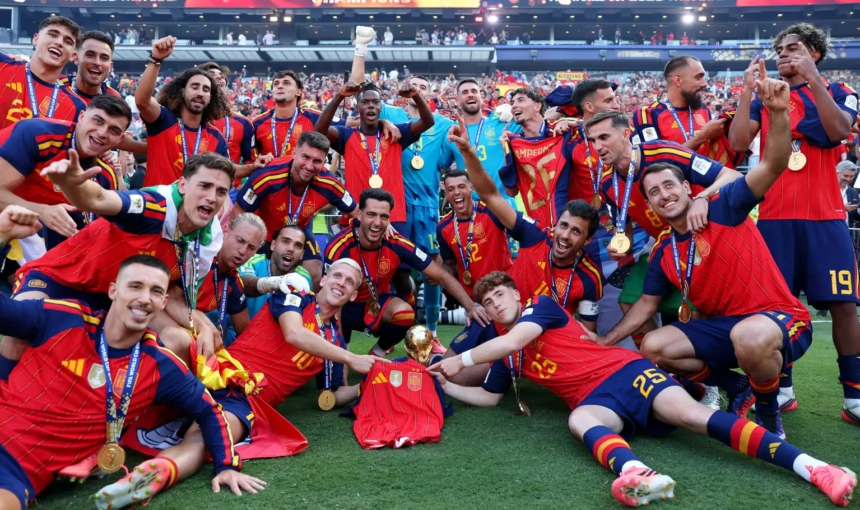
The 2026 FIFA World Cup concluded on 19 July 2026 with Spain defeating Argentina 1–0 in the final at MetLife Stadium in East Rutherford, New Jersey. The only goal of the match secured Spain’s second FIFA World Cup title and capped an impressive tournament in which they eliminated Belgium in the quarter-finals and France in the semi-finals before overcoming the defending champions. Spain’s triumph marked the end of the first-ever 48-team FIFA World Cup.
The tournament’s final standings placed Spain as champions, Argentina as runners-up, England in third place after defeating France 6–4 in the third-place playoff on 18 July 2026, and France in fourth. The expanded competition featured a record 104 matches across the United States, Canada, and Mexico, making it the largest World Cup ever staged in terms of participating teams and fixtures.
Several prestigious individual trophies were awarded after the final. Rodri (Spain) won the Golden Ball as the tournament’s best player, while Kylian Mbappé (France) claimed the Golden Boot as the leading scorer. Spain also earned the Golden Glove through goalkeeper Unai Simón, and defender Pau Cubarsí received the Best Young Player Award, reflecting Spain’s dominance throughout the tournament.
The 2026 tournament also produced numerous records. It was the first FIFA World Cup with 48 teams, resulting in the highest number of matches and the largest attendance in tournament history, with more than six million spectators. The expanded format created new opportunities for emerging football nations while setting new benchmarks for global participation and commercial success.
Individual milestones added to the tournament’s legacy. Lionel Messi, aged 38, became the oldest player to score a World Cup hat-trick and strengthened his position among the competition’s all-time leading scorers. Cristiano Ronaldo became the first footballer to score in six different FIFA World Cups, while Kylian Mbappé established a new record for the most goals scored in World Cup knockout matches.
The championship also highlighted remarkable achievements by smaller football nations. Cape Verde became the smallest nation ever to reach the knockout stage, while Dick Advocaat of Curaçao became the oldest head coach in FIFA World Cup history at 78 years of age. These milestones demonstrated the increasing competitiveness and diversity of international football under the expanded tournament format.
Reflecting on Spain’s historic victory, Rodri said after receiving the Golden Ball, “This award belongs to the whole team.” Following the final whistle on 19 July 2026, Spain’s players celebrated their achievement as world champions, while FIFA recognized the tournament as a landmark edition that combined record participation, memorable performances, and historic accomplishments.




