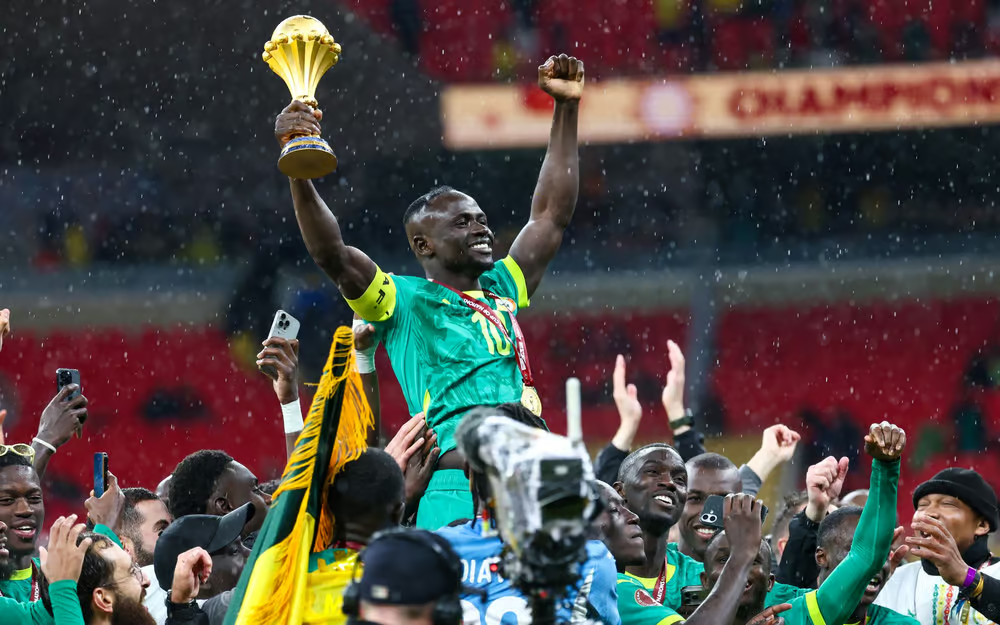
On 18 January 2026, the Africa Cup of Nations (AFCON) final between Senegal and Morocco in Rabat descended into chaos late in stoppage time when a controversial penalty was awarded to the hosts following a VAR review. Senegal felt aggrieved after having a potential winning goal disallowed earlier, and coach Pape Bouna Thiaw ordered his players off the pitch in protest, prompting a tense 14-minute delay as officials and players argued on the sidelines.
As players began walking toward the tunnel, Sadio Mané stayed on the pitch, visibly reluctant to abandon the match. After assessing the situation and consulting with former Senegal coach Claude Le Roy, who was pitch-side working as a television pundit and suggested the match should continue, Mané made a decisive move. “When they decided to go out and not play, I stayed and asked some people … Then I decided to go and bring everyone back to the pitch,” Mané said in a post-match interview.
Mané also credited Senegal football legend El-Hadji Diouf and former teammate Mamadou Niang for their role in convincing him that returning to play was the right choice for the team and the sport. According to reports, Diouf whispered guidance to Mané from the stands before the forward ran into the dressing room to assemble his teammates. “El Hadji Diouf called me from the stands and told us to keep playing. After that, I went to the dressing room and called the team again,” Mané explained.
With Mané’s intervention, the Senegal squad came back onto the field to resume the match, allowing the penalty to be taken. Morocco’s Brahim Díaz saw his Panenka attempt easily saved by Senegal goalkeeper Edouard Mendy, a moment that swung momentum back to the Teranga Lions. Had Senegal’s walk-off continued and the match abandoned, AFCON regulations might have led to sanctions or a forfeiture.
In extra time, Pape Gueye scored the decisive goal to secure a 1-0 victory for Senegal, earning the nation its second AFCON title in three editions. Observers and pundits widely praised Mané’s leadership under pressure, noting that his choice to prioritize finishing the match upheld the competition’s integrity. “Mané went the extra mile to bring his team back, and it paid off,” said former player Daniel Amokachi in commentary following the game.
Mané’s decision also sparked broader discussion about leadership in football. Despite the controversy, Mané said he believed general respect for the sport was paramount: “I think it is the best thing to do … Football should not stop for even ten minutes.” His intervention in one of African football’s most dramatic finals will be remembered as a defining moment in his storied career.