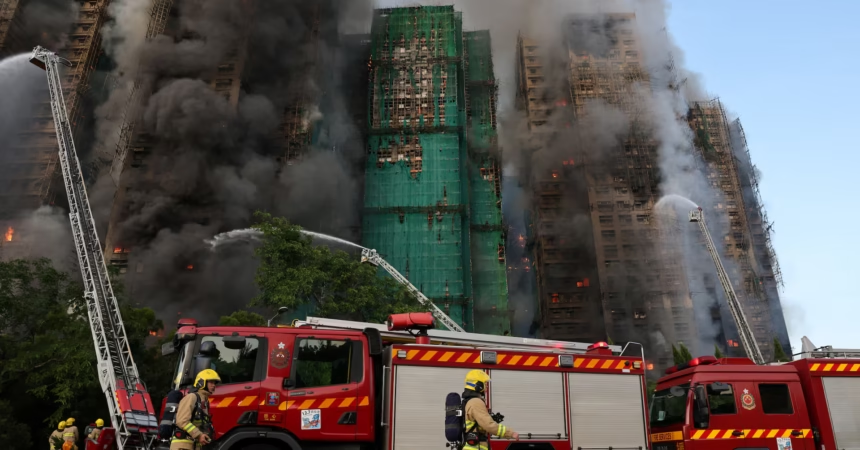
Hong Kong continues to confront the aftermath of the devastating fire that swept through the Wang Fuk Court residential complex in Tai Po on November 26, 2025, resulting in 128 confirmed deaths. The blaze ignited at 2:51 p.m. local time in a block under renovation, quickly engulfing surrounding flammable scaffolding and protective netting that covered multiple towers. Firefighting operations lasted more than 43 hours, with responders battling collapsing exterior structures until the fire was fully extinguished early on November 28.
According to investigators, the rapid escalation was driven by highly combustible renovation materials, including plastic sheeting, insulation foam, and canvas wrap. “The volume of combustible surface area made the fire behave like a vertical firestorm,” explained Chief Fire Officer Leung Wai-Ho on November 29. Residents reported that fire alarms in several blocks failed to activate, delaying evacuation and significantly increasing casualties.
Search-and-recovery operations have now concluded, with emergency teams forcibly entering every unit in the complex. While the official death toll remains at 128, authorities state that approximately 200 individuals are still unaccounted for, including dozens awaiting DNA identification. “We have completed our operational sweep, but this remains an immensely complex scene,” said Colonel Lam Chi-Keung, emphasizing the challenges of navigating damaged structures.
Government Action, Accountability Measures, and Public Outcry
The tragedy has prompted an immediate and wide-reaching government response. On November 29, China’s State Council Safety Committee launched a nationwide fire-safety inspection campaign, mandating urgent reviews of high-rise buildings—particularly those undergoing renovation. The inspections focus on building materials, scaffolding safety, fire-alarm functionality, and evacuation accessibility. “This incident is a severe lesson,” a government spokesperson stated. “Safety must never be compromised.”
Investigations into liability are accelerating. Authorities have arrested 11 individuals, including contractors, site supervisors, and construction-company directors. Prosecutors are examining allegations of substandard materials, forged safety certifications, and potential corruption. Residents previously filed multiple safety complaints about debris hazards and unstable external netting—complaints that media reports say were largely ignored. “We warned them again and again. No one listened,” one resident told reporters.
Public grief and anger continue to rise. Vigils have drawn thousands across Hong Kong, with mourners demanding systemic reform to building-safety enforcement. More than 2,000 residents displaced by the fire are now in overcrowded temporary shelters facing shortages of food, hygiene supplies, and medical support. Government officials have pledged both emergency relief funds and long-term reconstruction commitments, though many survivors say trust will take far longer to restore.