




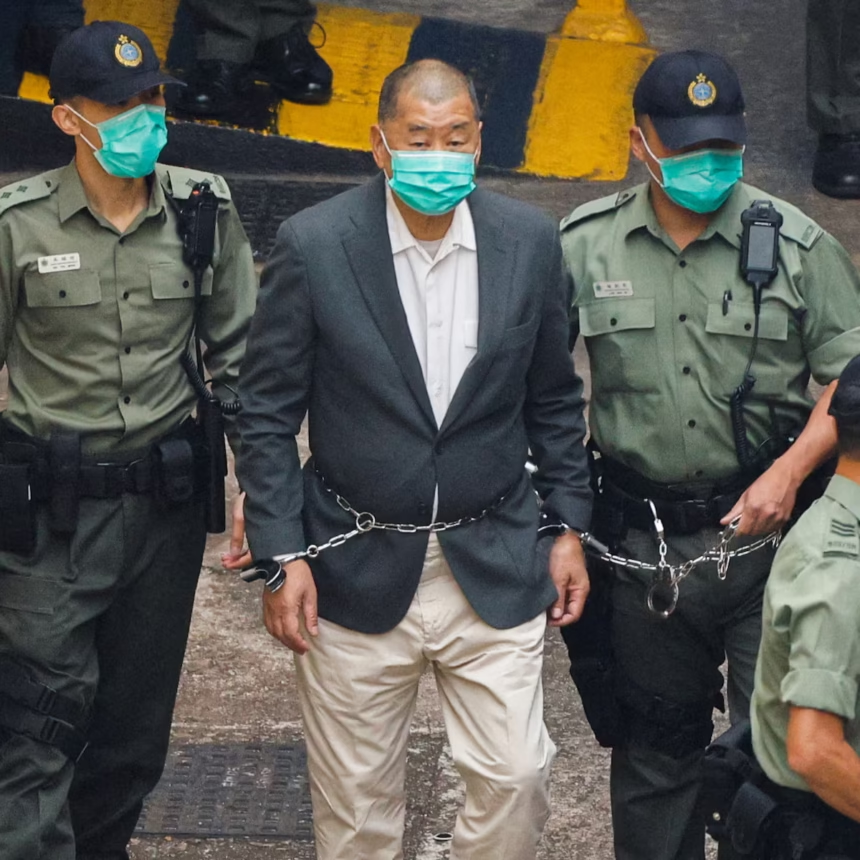
Hong Kong’s High Court on Monday, December 15, 2025, convicted media tycoon and pro-democracy figure Jimmy Lai Chee-ying on charges of colluding with foreign forces and publishing seditious materials, marking one of the most consequential rulings under the city’s Beijing-imposed National Security Law (NSL). The verdict follows a trial closely watched by governments, investors, and press freedom advocates worldwide.
Lai, 78, is the founder of the now-defunct Apple Daily, a newspaper that was once among Hong Kong’s most influential pro-democracy publications. Prosecutors argued that between 2019 and 2021, Lai used his media platform and international contacts to call for foreign sanctions and other actions against China and Hong Kong, acts the court ruled constituted threats to national security under the NSL enacted in June 2020 .
In its judgment, the three-judge panel stated that Lai’s actions were “not journalistic activities protected by press freedom” but rather political conduct intended to “solicit external interference in Hong Kong affairs.” The court found Lai guilty on multiple counts, including conspiracy involving his companies linked to Apple Daily, which ceased operations in June 2021 after police raids and asset freezes .
Hong Kong’s government welcomed the ruling, saying it demonstrated that “the rule of law is upheld and national security is effectively safeguarded.” In an official statement, authorities rejected claims that the case targeted political beliefs, stressing that “no one is above the law, regardless of background or status”.
International reaction was swift and sharply divided. The United Kingdom, United States, and several human rights organizations condemned the conviction, describing it as “politically motivated” and a further erosion of civil liberties promised under the “one country, two systems” framework. Rights groups warned that the ruling would have a “chilling effect on independent journalism and free expression” in the city.
A mitigation and sentencing hearing is scheduled for January 12, 2026, with Lai facing a potential life sentence under the National Security Law. Analysts say the outcome will serve as a defining signal of how far Hong Kong’s legal and media landscape has shifted since 2020, reinforcing Beijing’s emphasis on security while intensifying global scrutiny of the city’s future as an international hub.




