




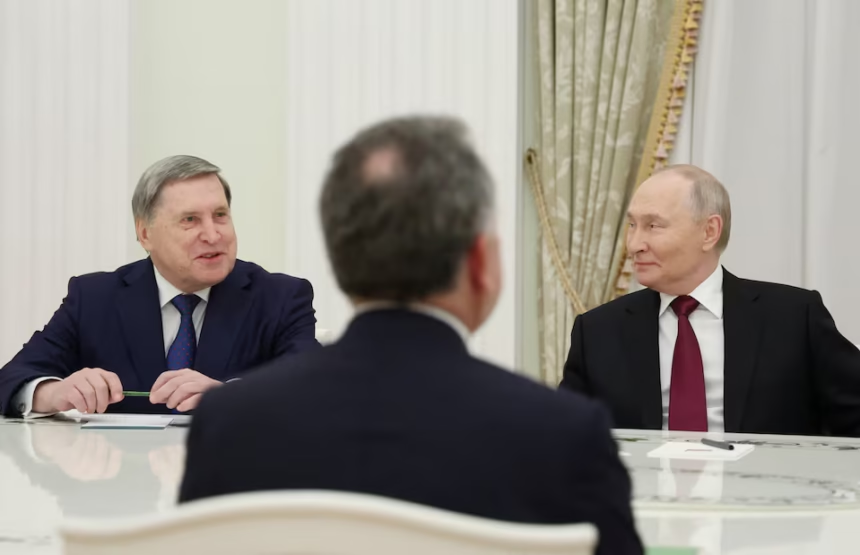
The Kremlin hosted a significant diplomatic engagement on December 2, 2025, as a U.S. delegation led by Steve Witkoff and Jared Kushner met Russian President Vladimir Putin for nearly five hours of negotiations. The meeting, held inside the Kremlin, represented the most direct contact between Washington and Moscow since renewed efforts began to revise the Ukraine peace framework. Officials from both sides described the exchanges as constructive, yet expectations of a breakthrough remained modest.
Stalled Peace Plan and Strategic Disagreements
According to Kremlin aide Yury Ushakov, discussions centred on the revised U.S. peace proposal for Ukraine. He noted that several elements were “more or less acceptable”, but insisted that critical sections remained “unacceptable” to Moscow. The most sensitive issues included territorial control, security guarantees, and the sequencing of military withdrawals, all of which have blocked progress in earlier rounds of talks.
American envoys entered the meeting with the objective of determining whether Moscow might adjust its long-standing demands. U.S. officials had indicated willingness to refine certain provisions of the plan to secure wider international backing, especially from Kyiv and key European partners. However, Moscow reiterated that any final arrangement must reflect “realities on the ground”, a phrase widely interpreted as requiring recognition of Russia’s territorial advances.
The timing of the talks reflects growing diplomatic pressure. Ukraine continues to reject any agreement that formalises Russian gains, while European governments monitor U.S.–Russia dialogue cautiously. The makeup of the U.S. delegation — composed of special envoys rather than senior administration officials — signalled the White House’s intention to maintain back-channel engagement without committing to immediate political concessions.
Despite a lack of tangible progress, both sides agreed to maintain communication. The Kremlin suggested that technical follow-up sessions may occur if Washington is prepared to revise several disputed clauses. U.S. representatives stressed that any final settlement must be acceptable to Ukraine, reinforcing that Washington would not pursue a bilateral deal excluding Kyiv.
The meeting also explored broader themes in U.S.–Russia relations, including economic contacts and the potential revival of strategic-stability dialogues. While neither side announced concrete initiatives, diplomats noted that the conversation created space for a modest improvement in communication channels after months of limited engagement.
Speculation continues regarding a possible summit between Putin and U.S. President Donald Trump, though both governments indicated that such a meeting is unlikely in the near term. Analysts argue that a leadership-level encounter would require clearer diplomatic convergence, something the December talks did not achieve. For now, both sides remain focused on managing tensions rather than redefining the strategic landscape.
 Join us on WhatsApp
As winter intensifies on the battlefield, the Moscow meeting highlighted the complexity of achieving a workable peace framework. The U.S. delegation’s visit reaffirmed Washington’s commitment to diplomacy but also revealed the persistent gaps obstructing progress. Whether these talks evolve into a credible pathway toward peace will depend on Ukraine’s stance, Russia’s strategic priorities, and the shifting dynamics of the conflict.




